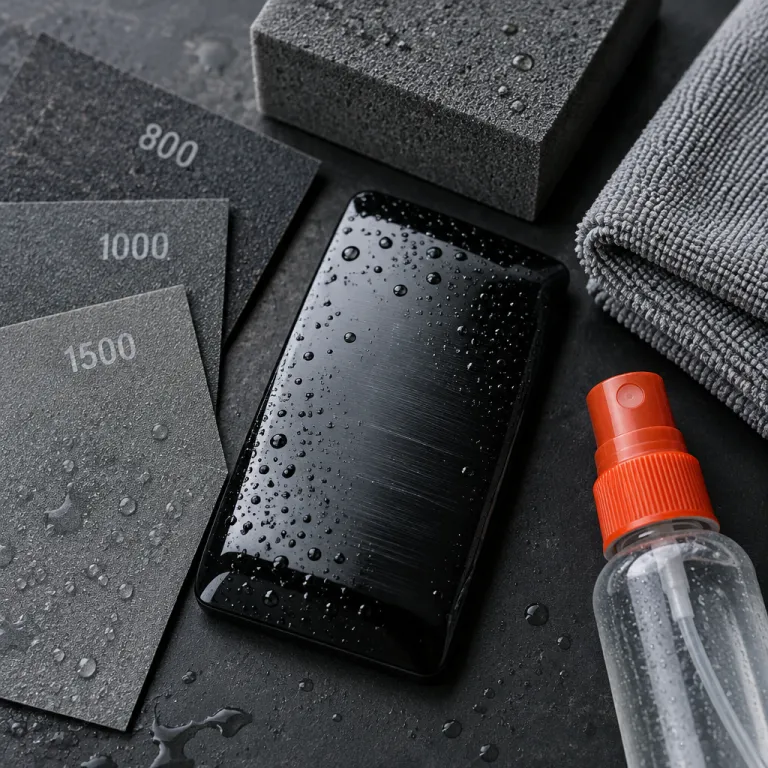
Why a refined wet sander routine matters for luxury paintwork
Luxury paintwork rewards precision, and a carefully chosen wet sander routine preserves that deep gloss. When you combine a high quality sander with controlled wet sanding, you can correct defects while keeping clear coat thickness within safe limits. Used correctly, this approach outperforms aggressive dry sanding that often leaves heat marks and uneven sandpaper scratches.
On a Bentley or Rolls Royce, the paint behaves differently from mass market finishes because the clear coat is usually thicker and harder, so the interaction between water, sandpaper grit and the orbital motion of your power tool must be managed with intent. A refined orbital sander or dual action sander variable in speed lets you level orange peel, dust nibs and isolated scratches without creating flat spots that betray a respray under showroom lighting. Owners who understand how wet sanding discs, wet dry sandpaper and even a compact belt sander fit into a complete correction system make better decisions when commissioning work from detailers or body shops.
Think of each wet sand session as a surgical intervention rather than routine maintenance. You are trading microns of clear coat for visual perfection, so every choice of grit sandpaper, every pass of the sanding disc and every drop of water must be justified. That mindset is what separates casual sanding from the kind of finish management expected on a multi six figure car.
Selecting the right wet sander, abrasives and accessories for prestige cars
For luxury vehicles, the ideal wet sander is usually a compact dual action orbital sander with precise variable speed control. A sander variable in both speed and orbit size allows you to tailor the aggressiveness of your sanding to delicate edges, complex curves and large flat panels. When you add a soft interface pad with a hook loop backing plate, the sanding discs conform to the body lines instead of cutting harshly into high spots.
Choose abrasives designed specifically for wet sanding, ideally with silicon carbide grains that cut cleanly and leave a predictable scratch pattern that polishes out quickly. On fresh paint, many high end body shops start with 2000 sandpaper grit, then refine with 2500 or 3000 grit sandpaper before machine polishing, while older factory paint may need slightly coarser grit sandpaper only on isolated defects. Always buy a product line that offers matching sanding disc and hand sheet options, so you can move seamlessly between machine sanding and hand work around badges, trim and tight curves.
Reserve a belt sander or wet belt system for specialist metal or wood metal trim work, never for exposed body panels. A belt sander can be useful on stainless steel exhaust tips or brushed aluminium door sills, but its linear motion is far too aggressive for clear coat, even with very fine sand. If you are correcting overspray or removing paint from plastic trim, rely on a controlled wet dry sanding process and then follow a dedicated guide on how to safely remove paint from plastic trim on a luxury car rather than improvising with heavy tools.
Managing water, dust and air to protect sensitive luxury materials
Wet sanding relies on a constant film of clean water between the sandpaper and the paint, which lubricates the cut and carries away abraded clear coat. On a luxury car, that same water can migrate into badges, window seals and panel gaps, so you must control both the flow and the cleanup. Use a low pressure spray bottle or dedicated wet sanding block that feeds water slowly instead of flooding the panel with a hose.
Even though wet sanding dramatically reduces airborne dust compared with dry sanding, you still generate fine residue that can travel through the air and settle on perforated leather, Alcantara and piano black interior trim. Always mask adjacent panels, door gaps and interior edges with high quality tape and plastic sheeting before you start, and keep a separate set of microfiber towels exclusively for wiping wet sand slurry. After each section, blow out seams gently with filtered air sanders or a dedicated air line, then dry the area thoroughly to prevent trapped moisture behind trim pieces.
Owners who care about refined care for perforated leather seats in a luxury car interior should schedule any interior detailing after all exterior sanding and polishing work is complete. That sequence prevents sanding dust, wet sand residue and polishing splatter from contaminating freshly cleaned leather and carpets. Treat the sanding stage as the dirtiest part of the process, then progressively move toward cleaner, more delicate tasks.
Technique: from wet sand to final polish on high value paint
Before touching a wet sander to the car, measure paint thickness with a calibrated gauge on every panel, including edges and repainted areas. Luxury cars often have previous cosmetic work, and a thin resprayed panel cannot tolerate the same level of sanding as original factory paint. Mark any low readings and avoid aggressive sanding there, relying instead on light polishing or leaving minor defects in place.
Work in small zones roughly 30 by 30 cm, keeping the sanding disc flat and the orbital sander moving in slow, overlapping passes at a controlled variable speed. Use only enough pressure to keep the hook loop backed sanding discs engaged, letting the grit sandpaper and water do the work rather than forcing the sander, and rinse the surface frequently so you can inspect the evolving finish. When the orange peel or scratch is uniformly leveled and the surface shows a consistent matte sheen without shiny low spots, stop sanding and move immediately to a finer sandpaper grit or to machine polishing.
Alternate between wet sanding and inspection under strong, colour corrected lighting to avoid over correction. A dual action power tool with a fine finishing pad and modern compound will quickly remove the uniform wet sand marks, revealing whether any deeper defects remain. If you need to repeat the process, limit yourself to one or two additional sanding cycles per month on the same area to preserve long term clear coat health.
Special cases: metal trim, wood veneers and heritage paintwork
Not every surface on a luxury car welcomes a wet sander, so you must distinguish carefully between paint, metal and wood. Polished stainless steel, chrome and brushed aluminium can sometimes benefit from controlled wet sanding with very fine silicon carbide sandpaper, but only when followed by metal specific polishes. In contrast, anodised aluminium and delicate plated finishes can be permanently damaged by even mild sanding discs or dry sanding.
Interior wood veneers and exterior wood metal inlays require an entirely different approach because their clear coats are often thinner and more brittle than body paint. Here, hand wet sanding with ultra fine sandpaper grit on a soft block is safer than any orbital sander, and you should avoid a belt sander or wet belt system altogether to prevent cutting through to the wood. When in doubt about rare veneers or heritage paintwork on collectible models, consult marque specialists and consider how provenance and originality influence value, as explained in depth in analyses of the heritage tax and whether buyers should pay it.
For classic Ferraris, Aston Martins and coachbuilt cars, original paint with patina may be worth more than a flawless respray. In such cases, limit yourself to minimal wet sand correction of isolated defects, focusing on preserving character rather than chasing absolute perfection. That philosophy respects both the car’s history and the expectations of serious collectors.
Ownership strategy: planning wet sanding within a long term care program
Luxury car ownership benefits from a structured maintenance plan that treats wet sanding as an exceptional procedure rather than routine detailing. Think of a wet sander as a scalpel you reach for only when polishing alone cannot safely remove a defect. This mindset protects your investment while still allowing you to enjoy a visually perfect car.
Schedule major correction work, including any wet sanding, around significant events such as concours entries, sales listings or the end of a restoration project, rather than repeating it every month. Between those interventions, rely on gentle washing, careful drying, protective coatings and occasional light dry sanding only on sacrificial components like exhaust tips or removable metal trim. When evaluating any new product, read detailed customer reviews that mention specific use on luxury paint, note whether the tool ships with appropriate hook loop backing plates and sanding discs, and confirm that the variable speed range suits delicate clear coats.
Owners who manage multiple cars across different climates should document every sanding session, including the grit sandpaper used, the areas treated and the measured paint thickness before and after. That record becomes invaluable when you change detailers, sell the car or assess whether another round of wet sand correction is still safe. Over time, this disciplined approach keeps both modern and classic luxury cars looking exceptional without compromising structural paint integrity.
Key statistics on paint thickness, sanding and defect removal
- Most modern luxury cars leave the factory with total paint thickness between 110 and 180 microns, while the clear coat layer typically represents 40 to 60 microns according to measurements published by major paint manufacturers.
- Professional detailers often aim to remove no more than 2 to 5 microns of clear coat during a combined wet sanding and polishing process, which preserves more than 80 percent of the original protective layer over the vehicle’s lifetime.
- Studies from automotive refinish suppliers show that moving from 1500 to 3000 sandpaper grit before polishing can reduce machine polishing time by up to 30 percent, because finer wet sanding marks are easier to refine.
- Controlled tests on dust generation indicate that wet sanding can cut airborne particulate levels by more than 50 percent compared with equivalent dry sanding, which is especially relevant for protecting sensitive luxury interiors.
- Industry surveys of high end detailing studios report that full body wet sanding is reserved for fewer than 5 percent of cars they service each year, underscoring that this technique is used sparingly on valuable vehicles.
FAQ: wet sanding and luxury car care
Can I use a wet sander myself on a new luxury car ?
Technically you can, but it is rarely advisable unless you have professional level experience with sanding, paint measurement and machine polishing. New luxury cars already have very good finishes, so most owners achieve better results and lower risk by limiting themselves to gentle polishing and leaving any wet sanding to trusted specialists.
How often is it safe to perform wet sanding on the same panel ?
There is no fixed number, because safety depends on initial paint thickness, previous corrections and the aggressiveness of each sanding cycle. As a rule, if a panel has already undergone one thorough wet sand and polish, any further sanding should be preceded by precise thickness measurements and a conservative plan that targets only specific defects.
Is wet sanding better than dry sanding for removing orange peel ?
Wet sanding is generally more controlled and produces a cleaner, more uniform surface when you are leveling orange peel on clear coat. Dry sanding cuts faster but generates more heat and dust, so it is usually reserved for body shop environments rather than for final refinement on finished luxury paintwork.
Which grit sandpaper should I start with on factory clear coat ?
On healthy factory clear coat, many professionals start no coarser than 2000 grit for isolated defects and often prefer 2500 or 3000 grit when the goal is subtle texture refinement rather than heavy defect removal. Starting finer gives you a larger safety margin and reduces the polishing work required to restore full gloss.
Can wet sanding fix deep scratches that you can feel with a fingernail ?
Deep scratches that catch a fingernail usually extend close to or through the clear coat, so aggressive sanding to remove them completely can compromise long term protection. In such cases, a combination of careful sanding, targeted polishing and sometimes partial repainting offers a safer balance between appearance and durability.