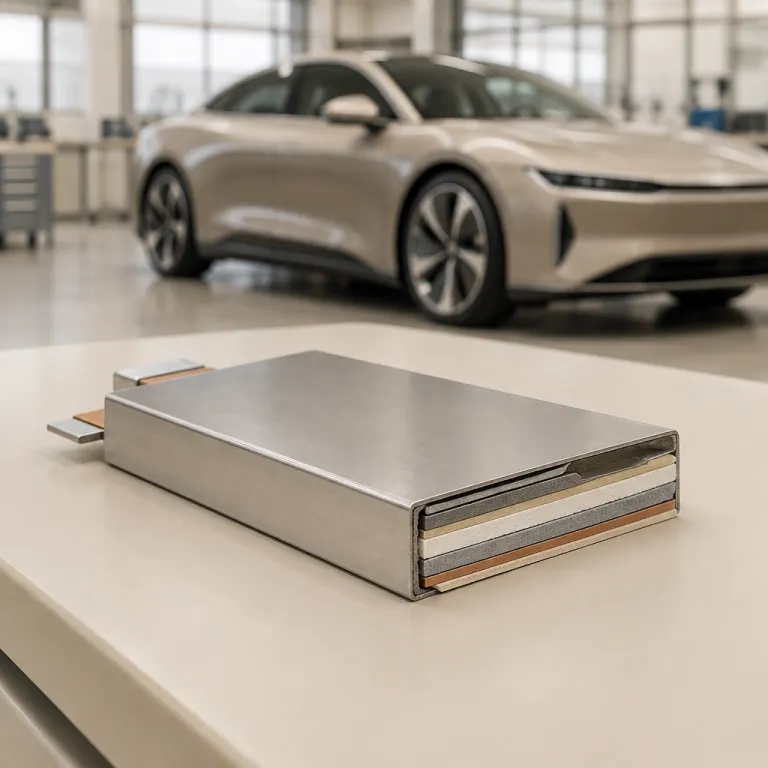
What a solid state battery luxury EV actually changes for you
Slide into a Mercedes Benz EQS or a Porsche Taycan and you immediately feel how far the electric car has come. Yet the quiet conversation in every lounge and paddock now turns to the next step, the solid state battery luxury EV that promises more range, less weight, and faster charging. The question for a luxury car owner is simple but sharp ; how much of that battery technology is real progress today, and how much remains a beautifully rendered slide.
At its core, a solid state battery replaces the flammable liquid electrolyte in current lithium ion cells with a solid material. That single change reshapes the entire battery pack, because solid electrolytes can enable higher energy density, improved safety margins, and potentially longer cycle life for both a single ion cell and full ion batteries. For a heavy luxury electric vehicle, where every kilogram of battery tech competes with sound insulation, leather, and active suspension, that extra energy per kilogram is not a lab curiosity ; it is the difference between adding range or adding refinement.
Current lithium ion battery packs in premium electric vehicles already deliver serious performance, but they carry compromises. To protect liquid electrolyte systems, engineers build in cooling circuits, structural casings, and software buffers that eat into usable energy and add mass to the car. A mature solid state battery with stable state cells and advanced state technology could trim that weight, sharpen handling, and free designers to push cabin comfort without turning your electric cars into rolling chemistry sets.
Energy density, safety and weight: why solid state matters in luxury cars
Think about how you actually use your luxury electric vehicle on a long weekend run. You want the effortless surge of torque, a quiet cabin, and the confidence that the battery pack will deliver its promised range even at autobahn speeds. Solid state batteries, at least on paper, address all three by combining higher energy density with improved thermal stability and a more compact package for both individual cells and complete packs.
In conventional lithium ion batteries, the liquid electrolyte can form dendrites when stressed, tiny lithium metal structures that threaten short circuits and force conservative software limits. A solid electrolyte in a state battery or even a semi solid design can better resist those dendrites, which allows engineers to use more aggressive chemistries and pack more energy into the same footprint. For a luxury car owner, that means a given floorpan can host either a lighter battery or a larger capacity pack, and both options translate into more refined electric vehicles that feel less like engineering compromises and more like fully resolved grand tourers.
Safety is the other quiet gain, because a solid state system is far less prone to thermal runaway than a pack filled with volatile liquid electrolyte. That does not make electric cars immune to abuse, but it does change how crash structures, underbody protection, and cabin isolation can be designed in future vehicles. It also intersects directly with tightening emissions and efficiency rules, as regulators in Europe and elsewhere push luxury cars toward cleaner, safer electric technology, a shift explored in depth in this analysis of Europe’s CO₂ rewrite and its impact on your next luxury car.
Charging speed, 800 V architectures and what you really gain
Owners who daily a Taycan, an Audi e tron GT, or a high spec Mercedes Benz EQ model already know that fast charging is no longer a science project. On a modern 800 V platform, a well managed lithium ion battery can take on energy at a rate that makes a coffee stop feel shorter than a fuel stop in a traditional car. That is why the gap between today’s best electric vehicles and the promised solid state future is narrower in charging terms than the marketing suggests.
Solid state cells should, in theory, tolerate higher charging power with less degradation, because the solid electrolyte can handle heat and ion flow more gracefully than a liquid electrolyte. When combined with advanced state technology and carefully engineered ion cells, that could mean shorter charging sessions and less stress on the battery over many years of use. Yet the reality is that grid limitations, charger availability, and thermal management in the vehicle often cap real world charging performance long before the chemistry inside the battery becomes the bottleneck.
This is why some of the most interesting work today is not only in pure solid state batteries, but also in semi solid approaches that blend liquid and solid elements to ease manufacturing. These hybrid designs aim to slot into existing production lines for electric cars while still nudging energy density and charging performance upward. If you want a sense of how far current lithium ion battery tech has already come in a luxury context, the detailed look at the future of electric luxury through the Porsche Taycan is a useful benchmark for what a top tier electric car can deliver before solid state packs arrive in volume.
Timelines, production reality and who is closest without the hype
Every few months, a headline suggests that solid state batteries will transform every electric vehicle almost overnight. The pattern is familiar by now, with bold claims about state cells, lithium metal anodes, and revolutionary state technology that will supposedly leap from lab bench to showroom in a single product cycle. Luxury car owners, used to long lead times for new platforms and powertrains, should treat those promises with the same skepticism they reserve for optimistic resale projections.
Companies such as Toyota, Mercedes Benz, and several specialist battery tech firms have all announced structured roadmaps toward solid state production. The language tends to focus on pilot lines, limited series vehicles, or specific use cases where a compact, high energy density battery pack can justify higher costs and tighter operating windows. In practice, that usually means niche electric vehicles or performance oriented electric cars will see early adoption, while mainstream luxury cars continue to refine lithium ion batteries and semi solid designs for many years.
The reason is brutally simple ; scaling any new battery technology from a few hundred state batteries to hundreds of thousands of packs requires stable supply chains, proven safety data, and consistent quality across millions of ion cells. That process takes years, not quarters, and it rarely follows the straight line implied by a press release. For a solid state battery luxury EV to reach your garage, every link from raw lithium to finished vehicles must align, and that industrial choreography is far harder than sketching a promising state battery on a slide.
Should you wait for solid state, or buy the best luxury EV today ?
So where does this leave a buyer who is cross shopping a high end combustion car, a plug in hybrid, and a flagship electric vehicle. The honest answer is that waiting for a perfect solid state battery luxury EV is like waiting for the perfect track day weather ; by the time it arrives, the season has moved on. If you need or want an electric car today, the best luxury electric vehicles already deliver compelling range, performance, and refinement with mature lithium ion batteries.
From an ownership perspective, the biggest gains you will feel over the next few years are likely to come from incremental improvements in lithium ion battery technology, smarter thermal management, and better integration of the battery pack into the chassis. Those changes will quietly extend usable range, improve charging curves, and reduce degradation without demanding a wholesale shift to pure solid state batteries. At the same time, semi solid designs and advanced ion battery chemistries will continue to filter into production, narrowing the gap between current packs and future state batteries without forcing you to sit on the sidelines.
If you already own a luxury EV, your money is often better spent on protecting and enhancing the car you drive rather than chasing speculative battery tech. High quality paint protection, such as the options compared in this guide to ceramic coating versus paint protection film for luxury finishes, will matter more to your daily satisfaction than the exact composition of the electrolyte in your cells. In the end, the real test of any battery, whether lithium metal, lithium ion, or solid state, is not the lab sheet but how confidently you exit the third corner on a wet Alpine pass with enough energy left to enjoy the next climb.
FAQ
Will a solid state battery make my luxury EV significantly lighter ?
A mature solid state battery can offer higher energy density than a comparable lithium ion pack, which means you can achieve the same range with less mass. In a luxury car, that weight saving can be reinvested in comfort features or used to sharpen handling and braking. The exact benefit depends on how aggressively the manufacturer optimizes the battery pack and chassis around the new cells.
Are solid state batteries safer than current lithium ion batteries in electric vehicles ?
Solid state designs replace the flammable liquid electrolyte with a solid material that is generally more resistant to thermal runaway. That change reduces the risk of fire in abuse scenarios and allows engineers to simplify some protective structures around the pack. However, overall safety still depends on cell design, pack architecture, and crash engineering, not chemistry alone.
How will solid state technology affect charging times for electric cars ?
Because solid electrolytes can handle higher ion flow and temperature, solid state cells have the potential to accept faster charging with less degradation. In practice, real world charging times will still be limited by charger power, grid capacity, and the vehicle’s thermal management system. For many owners, improvements in charging infrastructure may matter as much as the shift from liquid electrolyte to solid materials.
Should I delay buying a luxury EV until solid state batteries are widely available ?
For most buyers, delaying a purchase solely to wait for solid state batteries is not necessary, because current luxury EVs already offer strong range, performance, and reliability with lithium ion packs. Solid state technology is progressing, but large scale production and broad deployment in mainstream luxury cars will take time. Choosing a well engineered electric vehicle today lets you benefit from mature technology while the next generation quietly matures in the background.
Will existing luxury EVs be upgradeable to solid state battery packs later on ?
Retrofitting a current luxury EV with a future solid state pack is unlikely, because pack dimensions, cooling systems, and control software are tightly integrated into the vehicle platform. Most manufacturers design each chassis around a specific battery architecture and chemistry. Owners who want solid state technology will probably access it through new models rather than aftermarket conversions.