RUF B8 flat eight engine specs and the meaning of a true manufacturer
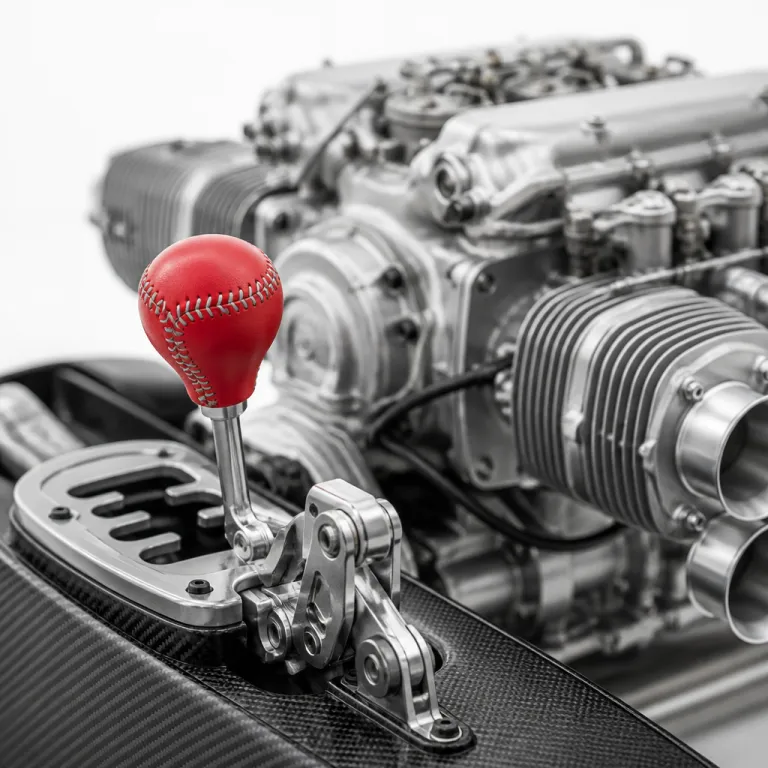
The RUF B8 flat eight engine specs read like a manifesto rather than a brochure line. This horizontally opposed 4.8 liter twin turbo unit is claimed to deliver in the region of 1,000 horsepower and around 1,000 newton metres of torque, making it one of the most extreme boxer engines ever fitted to a road going sports car and placing it in a different league from most luxury performance car engines. For an owner used to carefully curated power delivery in modern cars, this powertrain feels like a deliberate challenge to what a high performance grand tourer should be.
To understand why these RUF B8 flat eight figures matter, you have to treat RUF as a German manufacturer, not a tuner. The company holds its own national manufacturer status, stamps its own Vehicle Identification Numbers, and develops its own chassis and bodywork instead of simply modifying existing Porsche cars, which means the B8 engine is integrated from the first sketch rather than grafted onto a donor platform. That is why the RUF CTR story, from the original Yellowbird to later CTR models, forms a coherent automotive narrative rather than a series of aftermarket projects loosely based on Porsche sports cars.
Alois Ruf and his équipe decided long ago that the brand would live or die by engineering depth, not decal packages. When Alois Ruf notes that a boxer eight has never previously been part of their story, he is underlining how radical it is for a company built on flat six engines to commit to a new cylinder architecture. For a luxury car owner comparing performance metrics, the shift from a familiar flat six to this new flat eight engine layout is as significant as moving from a conventional V8 to a hybrid V12 in other high end cars.
The B8 sits in a CTR3 based chassis that has been stretched by roughly 100 millimetres in width and wheelbase to accommodate the longer engine and its ancillaries. This RUF CTR3 derived structure is not simply a widened Porsche platform, but a bespoke chassis that balances mid engine weight distribution with the packaging demands of a horizontally opposed eight cylinder layout. The result is a sports car package where the headline engine specs are matched by a carefully tuned dynamic envelope rather than raw numbers alone.
RUF calls the prototype car Erprober, meaning tester, and that name signals intent more than marketing. There is no announced production timeline, no pricing, and no guarantee that these exact B8 flat eight specifications will reach customer cars, which makes the project feel like a rolling laboratory rather than a limited edition sales exercise. For owners tracking regulatory shifts, this kind of experimental car also sits in tension with Europe’s evolving emissions rules, a topic explored in depth in this analysis of Europe’s CO₂ rewrite and its impact on future luxury cars.
Engineering audacity: why a boxer eight is so rare
The headline RUF B8 flat eight engine specs only make sense when you appreciate how difficult a boxer eight is to execute. A horizontally opposed eight cylinder engine roughly doubles the crankshaft length of a flat four and significantly extends beyond a flat six, which creates complex challenges in torsional stiffness, lubrication, and thermal management. That is one reason why very few production cars before this RUF project have used a boxer eight layout, even though flat engines have been central to Porsche and Subaru road cars for decades.
Packaging is the first enemy of any flat eight engine in a mid engine sports car. The extra cylinder pairs increase overall engine width, forcing engineers to rethink rear subframe design, exhaust routing, and intercooler placement, which explains why the CTR3 based chassis had to be stretched by about 100 millimetres to house the B8 without compromising suspension geometry. In a luxury car context, that extra width also affects rear tyre sizing, cooling airflow, and even luggage space, all of which matter when you expect a car to cross continents as easily as it sprints up a hill.
Thermal management is the second major hurdle for a high output flat eight engine. With power and torque figures around the four digit mark, the B8 produces heat loads that rival top level endurance racing cars, which demands carefully modelled coolant flow, oil circuit design, and turbocharger placement to avoid hotspots along the long horizontally opposed block. This is where specialist lubrication partners such as Motul, mentioned in connection with the development programme, become critical, because oil formulation and flow rates directly influence durability when you repeatedly run an engine like this at high speed on track.
Balance and vibration behaviour also change dramatically when you move from a flat six to a flat eight. While a flat six is naturally balanced in primary and secondary forces, a boxer eight introduces new harmonic patterns along the crankshaft, which RUF’s engineers had to tame through crank design, firing order, and engine mount tuning to keep refinement at a level acceptable for luxury car owners. The result, according to early Goodwood observers, is an engine that idles with a subdued burble but hardens into a metallic howl as revs rise, distinct from both traditional Porsche flat six engines and conventional V8s.
For readers interested in how other manufacturers translate complex engineering into real world performance, the detailed breakdown of the Cadillac CTS engine engineering insights offers a useful counterpoint to the RUF approach. Where Cadillac’s luxury sedans optimise for broad torque curves and everyday usability, the RUF B8 flat eight prioritises extreme power density and track resilience, yet both programmes show how serious brands treat engines as the core of their identity. In that sense, the B8 is less a one off experiment and more a statement about where RUF believes the emotional centre of a sports car still lies.
Manual gearbox, Goodwood debut, and what it signals to owners
The choice to pair the RUF B8 flat eight engine with a six speed manual gearbox is as provocative as the engine itself. In an era when most high power sports cars rely on dual clutch automatics to manage torque and emissions, RUF has decided that a traditional six speed manual transmission better suits the character of this horizontally opposed eight cylinder engine. That decision speaks directly to owners who still value the mechanical intimacy of choosing their own gears, even when dealing with four figure power outputs.
The prototype Erprober car, built on the stretched CTR3 chassis, made its public dynamic debut on the Goodwood hillclimb during the Supercar Run at the Goodwood Festival of Speed. Contemporary reports describe professional driver Tanner Foust at the wheel, using the B8’s output to deliver explosive acceleration while the manual gearbox demanded visible driver input, which contrasted sharply with the seamless shifts of neighbouring hypercars in the paddock. For many observers, that run turned an obscure engineering project into a tangible sports car, one that looked ready to trade lap times with the most advanced cars RUF has ever produced.
Goodwood has long been the place where the automotive world tests how new ideas play in front of an informed crowd. When a German manufacturer like RUF sends a prototype car to the Goodwood Festival, it is less about marketing and more about stress testing both engineering and public reaction, especially for something as radical as a flat eight engine in a familiar CTR silhouette. Owners watching from the sidelines could see how the car behaved under load, how the engine note evolved, and how the driver worked the six speed manual gearbox, all of which matter more than a spec sheet when you are choosing your next high value car.
For context, RUF’s journey from the original CTR Yellowbird to the naturally aspirated SCR and now to the B8 shows a consistent willingness to push beyond Porsche’s own offerings while respecting the underlying engineering philosophy. The cars RUF builds today, including this Erprober prototype, are not simply faster versions of existing Porsche cars but distinct interpretations of what a driver focused luxury sports car should be, with the B8 flat eight marking the most extreme expression so far. Owners cross shopping with high performance sedans and coupes can compare this approach with the more comfort oriented balance described in this guide to Cadillac ATS engine performance and horsepower, which highlights how different brands prioritise refinement, efficiency, and everyday usability.
Looking ahead, RUF has not committed to putting the B8 into series production, and that uncertainty is part of the appeal for collectors. The car called Erprober may remain a one off test bed, or its flat eight engine specs may evolve into a limited run of road legal cars RUF will offer to a handful of clients, but either way the signal is clear for luxury car owners who care about engagement. The future of high performance is not just about electrification curves and software updates, but about whether a car still makes you reach for a manual lever as you exit the third corner on a wet Alpine pass.