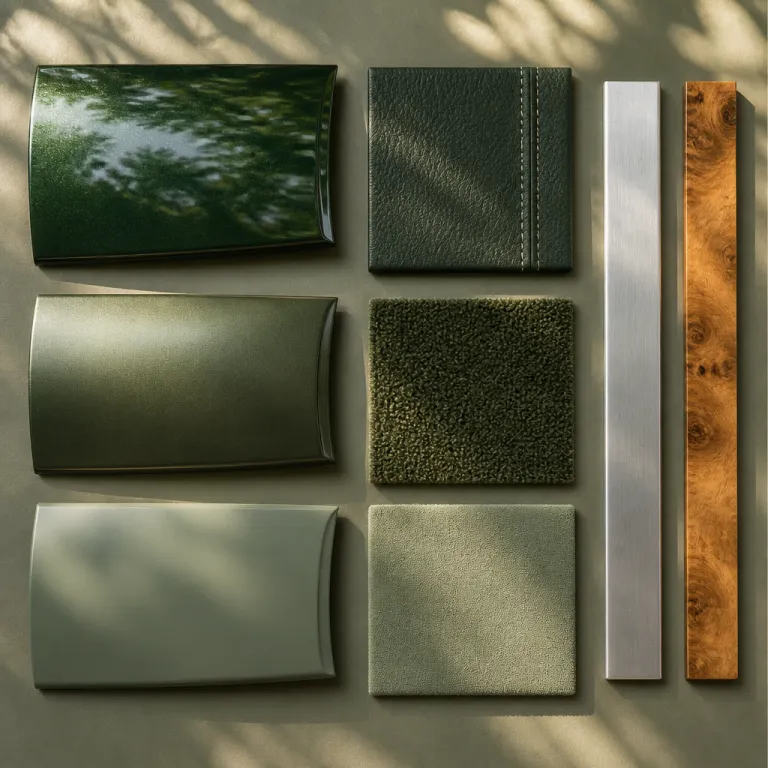
The greyscale hangover and the new appetite for color
For more than a decade, luxury car parks looked like corporate spreadsheets. Owners defaulted to black, white, and grey because these car paint choices felt safe, discreet, and easy to move on at a predictable price when the lease ended. That greyscale era was driven by fleet thinking rather than passion, with residual value algorithms quietly dictating which paint colors appeared on brochures and which custom color options stayed buried in the catalog.
Today, distinctive exterior finishes are finally breaking that monotony, as buyers with real skin in the game reject anonymous shades and ask for bolder color and texture. Growing global wealth means more clients purchase rather than simply finance, so they care less about the initial invoice versus the eventual sale price and more about how their automotive paint reflects their taste. The psychology has shifted from “Will this unit be easy to sell?” to “Will this car feel like mine every time I walk up to it?”.
Greyscale still has its place, especially when executed with depth, like a rich metallic paint in anthracite or a carefully layered black with a subtle pearl coat. A sophisticated Nardo-style grey can be elevated with a glassy clearcoat and a contrasting candy pearl brake caliper, as explored in this analysis of the refined appeal of a Nardo gray car. The difference now is that grey is a choice within a broader palette of luxury car custom paint colors, not the default setting imposed by cautious product planners.
Rolls-Royce has been one of the clearest signals that the greyscale spell is broken. The Spectre commission for the Bailey family used an iridescent Crystal over Arctic White finish and a bespoke “Beautiful Bailey” color inspired by the family dog’s fur, a story documented by Rolls-Royce in its 2023 launch materials and press photography. When a brand invests months of development and more than 180 veneer pieces to match a pet’s coat, it tells the market that colors paint stories, not just surfaces.
From configurator to commission: how bold paints are really chosen
The journey from a safe showroom color to a daring custom paint often starts on a screen. Modern configurators let you rotate your car in virtual sunlight, swap between blue, green, and apple red, and even preview two tone paint job ideas before you ever speak to a sales adviser. Social media then amplifies those experiments, as owners share screenshots of their dream car paint and crowdsource opinions long before a single coat is sprayed.
Brands have noticed that the most shared images rarely show a regular black or standard white basecoat, but rather a saturated candy paint, a deep pearl paint, or a complex metallic paint with a strong mix ratio of flake. Porsche’s Paint to Sample program now offers more than 170 historical and contemporary paint colors across its range, according to recent Porsche Exclusive Manufaktur communications, and the most requested shades are often bold blues and greens that once seemed too niche. When a Riviera blue 911 or a green paint 911E from the archive goes viral, it nudges hesitant buyers toward similarly distinctive luxury car custom paint colors on their own builds.
McLaren has gone even further by turning its digital tools into a gateway for true bespoke work. The brand’s online experience, detailed in this guide to how the McLaren configurator turns personal taste into a bespoke supercar, shows how a simple choice between blue paint and green paint can evolve into a full MSO commission with unique candy pearl effects. Owners start with a regular palette, then gradually refine the automotive paint, clearcoat depth, and even the unit price of each option until the final sale price reflects a truly individual specification.
Social platforms have also changed what “brave” looks like. A decade ago, a bright red coupe felt risky; now, a carefully judged apple red with a subtle pearl coat can be seen as tasteful heritage, especially on a Ferrari Roma or Aston Martin DB12. The real danger lies not in color itself but in poorly judged combinations, where a loud candy paint fights with black wheels, blue calipers, and too many contrasting colors paint details.
Factory special vs full bespoke: what you really pay for
When you move beyond standard luxury car custom paint colors, you quickly encounter two paths. Factory special paints are curated options offered at a fixed unit price, often grouped as metallic paint, pearl paint, or special candy paint finishes. Full bespoke commissions, by contrast, treat every layer of paint, basecoat, and clearcoat as a blank canvas, with cost and time scaling rapidly.
On most high end models, a regular metallic paint might carry a modest uplift over the list price, while a more complex tri coat or candy pearl finish can add a serious premium to the sale price. The difference comes from the extra labor, the tighter mix ratio tolerances, and the need for more test panels to ensure the car paint matches the approved sample under multiple lighting conditions. Each additional coat increases the risk of defects, so the price unit reflects not just materials but the expertise required to deliver a flawless paint job on a large body shell.
Move into full bespoke territory and the economics change again. Here, the unit price of the paint itself can be dwarfed by the hours spent in color development, where designers and chemists adjust green paint or blue paint tones by fractions until the custom color works with the interior leather and trim. This is the realm where a single car can justify its own batch of automotive paint, and where the final sale price reflects a one off statement rather than a regular production option.
Paint is only one part of the personalization equation, of course. Many clients pair a unique exterior color with a tailored cabin, and the real cost of that combination is unpacked in this deep dive into what bespoke interiors actually cost. The smartest specifications align the exterior custom paint, interior materials, and even wheel finishes so that every unit of design effort works together, rather than paying a premium for isolated flourishes that never quite cohere.
Color, value, and the quiet return of two tone finishes
Resale value still matters, even for buyers who can afford to ignore it. The good news is that luxury car custom paint colors no longer automatically punish you at trade in, provided the choices are coherent and well executed. Subtle metallic paint in blue, deep green paint, or a rich apple red often holds value better than flat, lifeless shades that make an expensive car look like a fleet unit.
Data from specialist dealers suggests that tasteful blues, greens, and certain reds can command a higher sale price than a regular black or silver, especially on brands with strong heritage in those hues. One UK-based independent reported that a well-specified British racing green Aston Martin Vantage sold around 8% faster than comparable grey cars in its stock over a 12-month period, echoing broader auction results where iconic colors outperform safe shades. In these cases, the original price uplift for the paint is often more than offset by stronger demand when the car reenters the market.
Where owners still need caution is with extreme candy paint or very loud custom color combinations that age quickly. A neon candy pearl finish might look spectacular on social media but limit your buyer pool later, especially if the mix ratio between basecoat and clearcoat creates a shade that is hard to repair or match. The safest approach is to keep the main body color relatively timeless, then use accents, stripes, or contrasting roofs to express personality without tying the entire paint job to a passing trend.
This is where the renaissance of two tone finishes comes in. Rolls-Royce, Bentley, and Maybach have brought back contrasting roofs and upper body sections, using carefully layered automotive paint and clearcoat to create a floating effect that recalls pre war coachbuilding. Two tone treatments let you enjoy bold colors paint on the roof or pillars while keeping the main body in a more regular shade, striking a balance between individuality and long term value.
Beyond cars: how trucks, SUVs, and social feeds reshape the palette
The shift away from greyscale is not limited to low slung coupes and supercars. Luxury SUVs and even high end truck paint specifications are now part of the same conversation, as owners expect their entire garage to reflect a coherent palette. A satin green paint on a G Class, a deep blue metallic paint on a Range Rover, and a subtle pearl paint on a performance truck can all share the same design language.
Because these vehicles often live harder lives, the technical side of paint matters more. A robust basecoat and clearcoat system, a carefully controlled mix ratio, and high quality automotive paint can mean the difference between a finish that shrugs off winter grime and one that looks tired after a few seasons. Owners who use their SUVs and trucks for towing or long distance touring should pay close attention to the unit price of protective coatings, which can save money over time by reducing the need for corrective paint job work.
Social media continues to accelerate these trends by normalizing bolder luxury car custom paint colors on larger vehicles. When a lifted truck in a tasteful apple red or a full size SUV in a deep candy pearl green appears in your feed next to a supercar, the old boundaries between car paint and truck paint aesthetics start to blur. The result is a more adventurous, more personal approach to colors paint across the entire luxury segment.
Ultimately, the revival of color is about confidence. Owners are no longer content with a regular black unit that could belong to anyone; they want a car whose paint, from basecoat to clearcoat, feels as considered as the engine and chassis. The real luxury is not the spec sheet, but the way your chosen color still excites you on the third corner of a wet Alpine pass.
FAQ
Which luxury car colors tend to hold the best resale value ?
On luxury cars, timeless metallic paint in blue, deep green, and certain shades of red often holds value well, especially when linked to a brand’s heritage. Subtle greys and blacks still perform strongly, but very loud candy paint or unusual custom color combinations can narrow the buyer pool. The safest strategy is to choose a coherent, high quality paint job with a classic main color and reserve experimental tones for accents.
Is a full bespoke paint commission worth the extra cost ?
A full bespoke automotive paint commission is worthwhile if you plan to keep the car long term and value uniqueness over strict resale optimization. The higher unit price reflects extensive development work, from test panels to fine tuning the mix ratio and clearcoat depth, which you will appreciate every time you drive. If you change cars frequently, a curated factory special paint may offer a better balance between individuality, upfront cost, and future sale price.
How risky are bold colors like bright green or apple red ?
Bold colors such as bright green paint or apple red can work very well when they suit the model and are executed with a sophisticated metallic or pearl coat. They tend to attract more attention, which some owners love and others tire of, so you should be honest about your own tastes. For resale, these colors usually appeal to a narrower but more passionate audience, so condition and quality of the paint job become even more critical.
What should I ask my dealer about the technical side of paint ?
You should ask which paint system is used, how many layers of basecoat and clearcoat are applied, and how repairs are handled if the car needs bodywork later. Clarify whether your chosen color is a regular production shade, a special option, or a full custom paint, because that affects both unit price and repair complexity. It is also wise to ask about recommended protection, such as film or ceramic coatings, to help save the finish from stone chips and UV damage.
Are two tone paint schemes harder to maintain ?
Two tone schemes are not inherently harder to maintain, but they do require more care when repairing damage, because the transition line between colors must be perfectly aligned. High quality automotive paint shops can handle this, yet the work may cost more than a single color repair due to masking and blending time. If you choose a two tone design, keep records of the exact paint colors and codes so any future work can match the original specification precisely.