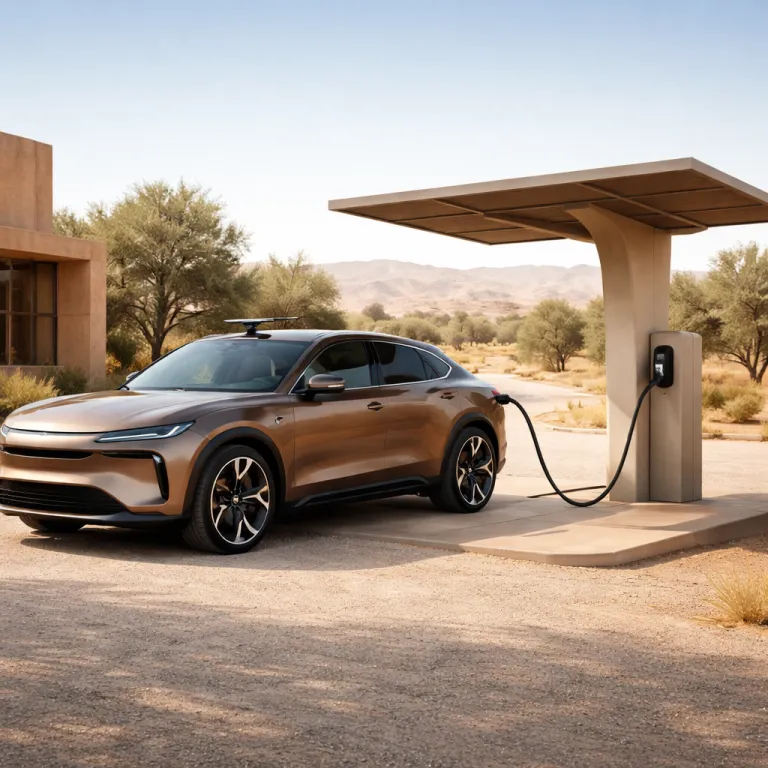
World Car crown and why Lucid Gravity autonomous driving matters more
World Car Awards recognition gives the Lucid Gravity SUV instant cachet with luxury buyers, yet the real story is how Lucid Gravity autonomous driving reshapes what you expect from a flagship family vehicle. The jury of more than one hundred automotive journalists validated the Gravity as a complete product, but owners focused on driving lucid every day care more about how its autonomous driving stack, hardware, and software will age over a decade of use. For a clientele used to grand touring in a Bentley Bentayga or a Mercedes Maybach GLS, the question is simple ; will this lucid gravity still feel cutting edge when your second or third software update changes how it drives itself.
Lucid Motors positions the Gravity as the first lucid group model with true point to point hands free capability, promising active driver assistance that handles both highway and dense city traffic with automated driving logic. In practice, that means the vehicle will manage lane change maneuvers, maintain a free lane around you when possible, and execute complex driving features such as merging and exiting with minimal driver input, while still requiring your hands and eyes as backup on early level autonomous deployments. The ambition is clear ; Lucid Gravity autonomous driving is not a gimmick but a core part of the platform, designed so that each over the air update refines the nuro software style perception stack, the dreamdrive control logic, and the real time decision making that separates a premium driver assistance suite from a true automated driving experience.
Underneath the elegant bodywork, Lucid Gravity uses dual motor all wheel drive, standard adaptive air suspension, and available rear axle steering to give the software a more capable physical canvas. That hardware mix matters because autonomous systems are only as good as the vehicle dynamics they can command, and Gravity’s chassis lets the dreamdrive and dreamdrive pro suites blend comfort with sharp responses when the driver or the nuro driver style logic needs to react quickly. For owners cross shopping a lucid air sedan or other luxury SUVs, the gravity of the decision is whether you want a car that feels finished on delivery or a lucid vehicle that keeps adding features lucid engineers have not yet activated, turning every long drive into a rolling software update experiment.
From hands free today to Level 4 tomorrow ; the Nvidia bet
Lucid Gravity autonomous driving starts with hands free highway and city capability, but the roadmap is what should interest a serious luxury car owner. The company has publicly targeted a progression from advanced driver assistance and automated driving features toward Level 3 autonomy, then Level 4 level autonomous capability, using a full stack built around Nvidia Drive computing. That Nvidia partnership is not a marketing flourish ; it is a hardware and software marriage that lets lucid motors push real time perception, planning, and control updates at a cadence more familiar to smartphone users than traditional grand touring SUV owners.
Vertical integration is the quiet advantage here, because Lucid designs its own motors, inverters, battery packs, and much of the vehicle control software in house, which tightens the feedback loop between engineers and drivers. When you engage dreamdrive or the more capable dreamdrive pro suite, every steering input, every lane change request, and every moment when you take your hands back on the wheel becomes data that can refine future driver assistance behavior. That is a very different ownership proposition from a traditional luxury SUV that feels frozen in time, and it mirrors how expert Mercedes Benz care and repair for peak performance focuses on long term drivability rather than just showroom gloss.
Compared with Tesla, Lucid faces a harder near term problem but a potentially cleaner long term solution, because it must launch Lucid Gravity autonomous driving without the vast fleet data Tesla has accumulated while still convincing regulators and owners that its level autonomous ambitions are realistic. Yet by using merchant silicon from Nvidia instead of fully proprietary chips, Lucid can scale Nvidia Drive hardware across lucid air, lucid gravity, and future models, while keeping the same core nuro software style stack tuned for each vehicle. For you as a driver, that means the same familiar interface, the same driving features, and the same active safety logic whether you are driving lucid in your personal SUV or stepping into a chauffeured Gravity configured for semi autonomous grand touring duty.
Uber, Nuro and the luxury robotaxi question
The Uber and Nuro deal to deploy at least twenty thousand Lucid Gravity units with Nuro Level 4 technology on the Uber platform raises a provocative question for any luxury owner ; what happens when your preferred badge also runs as a robotaxi. On one hand, that scale gives Lucid Gravity autonomous driving an enormous real time data stream, because every nuro driver style module operating in mixed traffic helps refine the automated driving logic that later arrives in your private vehicle. On the other, some buyers may wonder whether sharing hardware and software DNA with an Uber fleet dilutes the exclusivity they expect from a lucid group flagship.
From a technology perspective, the Uber platform deployment is a stress test that most luxury brands never attempt, forcing Lucid to harden its hardware, software, and driver assistance features against the brutal duty cycle of commercial use. If dreamdrive and dreamdrive pro can survive thousands of hours of hands free operation with minimal human intervention in an urban robotaxi context, then the same systems in your lucid gravity or lucid air should feel almost over engineered for personal grand touring. That is where Lucid’s vertical integration again matters, because the same engineering équipe that tunes the air suspension and rear steering for comfort can calibrate the active safety envelope for both private owners and fleet operators.
For the luxury buyer, the upside is a vehicle that improves meaningfully over time, not just cosmetically but in how it thinks, reacts, and drives, much like how an 800 volt platform quietly became the real luxury feature for several high end EVs by transforming charging and performance. Your Gravity could leave the showroom with capable Lucid Gravity autonomous driving and, several software revisions later, feel like a sharper, calmer, more intuitive companion on a late night drive home, while the same core platform underpins anonymous Uber rides across town. In that world, the true luxury is not the stitched leather alone but the confidence that your vehicle’s driving features, active safety, and automated driving intelligence are aging in reverse, getting better every month rather than fading like a spec sheet left in the sun.
For readers interested in how personalisation and technology intersect in the broader luxury space, the way Lucid curates its software and hardware options echoes how a bespoke supercar configurator translates taste into engineering reality, as seen in detailed analyses of the McLaren configurator and its approach to tailoring every drive. That same philosophy of aligning features lucid owners actually use with the underlying platform is what will separate a merely competent autonomous driving system from one that feels like a natural extension of your own hands and instincts on the wheel. In the end, the measure of success for Lucid Gravity autonomous driving will not be a press release milestone but how it behaves on the third unfamiliar roundabout of a rainy night, when you quietly let the system take the strain and judge whether this new kind of luxury has truly earned your trust.
Key quantitative insights on Lucid Gravity autonomous driving
- World Car Awards juries now include more than one hundred automotive journalists from multiple continents, giving the World Luxury Car title broad industry visibility even if it does not guarantee sales success.
- Lucid has committed to rolling out hands free highway and city driving on Gravity as its first point to point autonomous capable model, before extending similar capabilities to other vehicles in its range.
- The Uber and Nuro agreement covers at least twenty thousand Lucid Gravity units equipped with Level 4 autonomous technology, a scale that could rapidly accelerate real time data collection for Lucid’s software stack.
- Lucid’s dual motor all wheel drive layout in Gravity, combined with adaptive air suspension and optional rear axle steering, provides a dynamic base that supports both high comfort and precise automated control.
Questions luxury owners also ask about Lucid Gravity autonomous driving
How will Lucid Gravity autonomous driving change everyday luxury ownership ?
For a luxury owner, Lucid Gravity autonomous driving shifts the focus from static specification to evolving capability, because the vehicle’s driver assistance and automated driving features can improve through over the air updates. Instead of trading into a new model just to gain better lane change logic or more refined hands free operation, you could see those enhancements arrive during routine charging sessions. That makes the Gravity feel less like a finished object and more like a long term technology platform that matures alongside your driving habits.
What is the difference between driver assistance and Level 3 or Level 4 autonomy in Gravity ?
Current driver assistance systems in Lucid Gravity, such as dreamdrive and dreamdrive pro, support the driver by handling tasks like adaptive cruise, lane centering, and certain automated lane changes while still requiring constant human supervision. Level 3 autonomy would allow the vehicle to manage all aspects of driving in defined conditions, such as specific highways, while legally permitting the driver to divert attention, though they must be ready to retake control when requested. Level 4 autonomy, as targeted in the Nuro and Uber deployments, aims for the vehicle to handle all driving within its operational domain without expecting a human driver to intervene, which is why it is suitable for robotaxi style services.
How does the Nvidia partnership influence Lucid Gravity autonomous driving performance ?
The Nvidia partnership gives Lucid access to high performance Nvidia Drive computing hardware, which processes sensor data and runs the artificial intelligence models that underpin autonomous driving. By standardising on this merchant silicon across models like lucid air and lucid gravity, Lucid can focus its engineering resources on software, perception, and control algorithms rather than custom chip design. For owners, that should translate into faster feature rollouts, more consistent behaviour across vehicles, and a clearer upgrade path as Nvidia releases more powerful generations of its platform.
Will the Uber and Nuro robotaxi fleet affect the exclusivity of owning a Lucid Gravity ?
Seeing Lucid Gravity vehicles operating as Uber robotaxis equipped with Nuro Level 4 systems may initially feel at odds with the traditional notion of exclusivity, where luxury badges remain rare on commercial fleets. However, the intense real time usage those vehicles experience will stress test hardware and software in ways private ownership never could, likely improving reliability and refinement for retail customers. For many luxury owners, the trade off of sharing technology with a fleet will be acceptable if it results in a more capable, more trustworthy Lucid Gravity autonomous driving experience in their own garage.
How does Lucid Gravity compare with Tesla on autonomous driving strategy ?
Tesla benefits from a massive installed base feeding data into its Full Self Driving system, while Lucid starts with a smaller fleet but a more vertically integrated vehicle platform and a reliance on Nvidia Drive hardware. Lucid’s approach emphasises tight integration between chassis dynamics, powertrain control, and software, aiming to deliver a more cohesive driving feel even when the system is in hands free mode. For a luxury buyer, the choice often comes down to whether you prioritise Tesla’s scale and early mover advantage or Lucid’s focus on refinement, ride quality, and a more traditional luxury experience layered with cutting edge autonomous capability.
