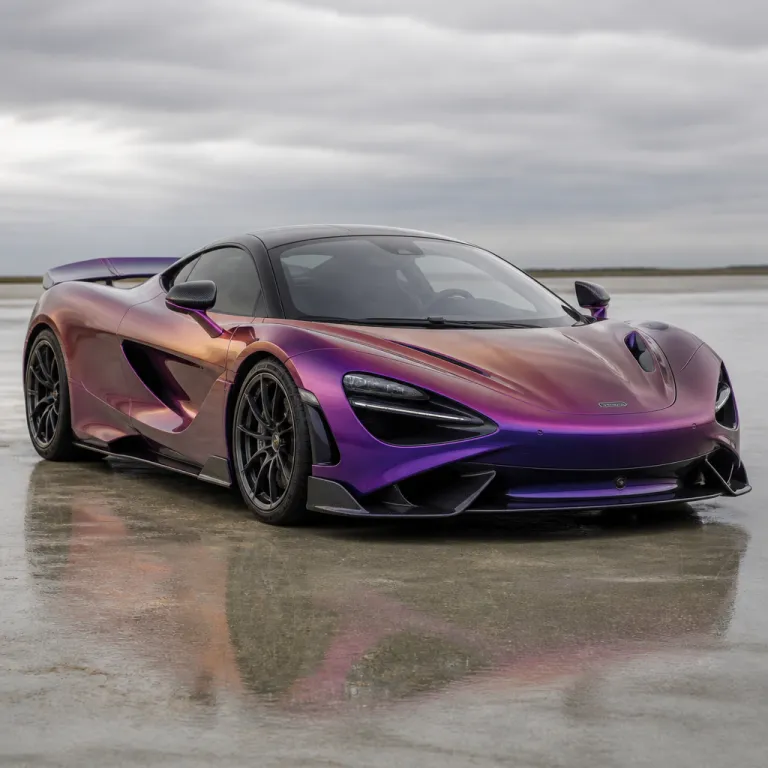
McLaren 788HS specs price and the MSO-only sales experiment
The McLaren 788HS arrives as a limited-run coda to the 720S series, and the headline McLaren 788HS specs price story is inseparable from how the car is being sold. Every vehicle is routed through McLaren Special Operations, turning what used to be an options list into a gatekeeping mechanism that filters buyers by taste, patience, and relationship rather than by simple budget. For an owner used to walking into a Philadelphia or Beverly Hills showroom and speccing a car off the rack, this model signals a shift toward curated access where the terms of ownership feel closer to commissioning a watch from a discreet Geneva atelier than buying a supercar from a dealer.
On paper, the 788HS is the most potent evolution of this carbon architecture, with 778 hp from the twin turbo 4.0 liter V8, a dry weight of 1,265 kg, and a power to weight ratio of 615 hp per tonne that eclipses the already feral 765LT. That power weight balance is not marketing fluff ; it is the hard edge you feel when the powertrain driver modes are set to their most aggressive calibration and the mount calibration for the engine and gearbox tightens the whole car around you under load. The McLaren 788HS specs price conversation therefore starts with physics, because this model’s performance envelope is what justifies a premium over earlier cars in the same series.
Acceleration from 0 to 100 km/h in 2.8 seconds and a top speed of 205 mph place the 788HS in the thin air where only the most focused supercars operate, yet the distance usability story matters just as much for owners who actually drive long distance rather than trailer to Goodwood. McLaren quotes a 10 percent increase in downforce over the 765LT thanks to a new carbon aero package, and that extra stability at speed is what turns 500 mile days into something you might actually look forward to instead of endure. In real terms, the McLaren 788HS specs price equation is not just about raw numbers but about how that raised active aero and carefully tuned suspension make the car feel less nervous when you are covering serious miles on imperfect roads.
Visually, the exterior treatment makes it clear this is a send off rather than a gentle facelift, with a multi section front splitter, S duct hood, taller active rear wing, and an F1 inspired diffuser that together give the front and rear a more purposeful stance. The forged aluminum wheels with center locks are a first for this platform, and they sit over carbon ceramic brakes derived from the Senna, with massive front calipers clamping discs that shrug off repeated high speed stops. For owners who care about the last few kilograms of weight, the super lightweight forged wheels and titanium exhaust system trim unsprung mass and exhaust weight, sharpening responses in a way you feel every time you change direction quickly.
At the back, the titanium exhaust exits through a quad exit layout that sits high in the rear bumper, and the combination of exit titanium pipework and careful mount calibration gives the V8 a harder edged note than earlier cars in the series. The raised active rear wing works with the diffuser to keep the vehicle planted, and when the active rear aero stands up under braking you sense the car hunkering down rather than pitching forward. Owners who have sampled both the 765LT and this new model will notice that the 788HS feels more keyed into the road, with the powertrain driver settings and chassis tuning working together to make the car feel like a cohesive whole rather than a collection of aggressive features.
Inside, the interior is still recognisably 720S based, but the details are where the McLaren Special Operations treatment earns its keep, from exposed carbon weave on the door uppers to bespoke stitching patterns that can echo a favourite watch strap or yacht interior. Many cars will be specified in black themes with contrasting Alcantara, yet the real artistry comes when an owner leans into bolder palettes and allows the carbon structure to frame rather than dominate the cabin. For those cross shopping other coupes, it is worth reading a detailed coupe ownership piece such as the Cadillac CTS coupe experience, because it underlines how much everyday ergonomics and visibility matter even when the headline numbers shout louder.
From 765LT to 788HS: where the architecture finally peaks
Comparing the McLaren 788HS specs price story to the 765LT is not about chasing tenths on a spec sheet ; it is about understanding where this carbon tub and twin turbo V8 architecture finally reaches its ceiling. The 765LT already felt like the wild side of the 720S family, yet the 788HS adds more power, more downforce, and a more aggressive aero map without tipping the vehicle into track only territory. That balance is crucial for owners who expect their car to handle a long distance blast to a circuit, deliver a few hard sessions, then carry them home in relative comfort without feeling like a stripped out special.
The new carbon aero package is the most visible change, with a deeper front splitter, reprofiled front bumper, and carefully sculpted front fenders that feed air into the S duct hood and over the roof toward the active rear wing. At speed, the raised active aero element works with the diffuser to generate that extra 10 percent downforce, and the result is a car that feels more stable in fast direction changes than the already sharp 765LT. On a fast, flowing road the combination of super lightweight forged wheels, carbon ceramic brakes, and revised suspension mount calibration makes the 788HS feel like it has less weight to move around, even though the actual dry weight figure is only marginally different.
Braking hardware is another area where the 788HS leans on McLaren’s halo models, with Senna derived carbon ceramic discs and multi piston forged calipers that resist fade even after repeated high speed stops. The front calipers bite hard yet remain easy to modulate, which matters when you are trail braking into a tightening radius corner and relying on the chassis to stay calm. Owners who have driven long miles in earlier models will appreciate how the power to weight ratio and braking package now feel more aligned, giving the car a more predictable character when you are deep into the pedal on a bumpy surface.
Exhaust and engine character have also evolved, with the titanium exhaust system and quad exit layout giving the V8 a sharper, more metallic edge at high revs while remaining civilised at a steady cruise. That duality is important for distance usability, because a car that drones at motorway speeds quickly becomes a garage queen rather than a genuine long distance companion. In the 788HS, the powertrain driver modes allow you to soften the response and quieten the exhaust when you are covering miles, then wake the car up fully when the road opens and you want every bit of that 778 hp on tap.
Inside the cabin, the interior remains focused but not punishing, with thin shell seats that hold you firmly without feeling like a race car compromise, and enough adjustment to make a 1,90 m driver comfortable over several hundred kilometres. The details matter here ; from the feel of the forged aluminum shift paddles to the way the carbon trim pieces meet the Alcantara, the 788HS feels like a more resolved object than some earlier McLaren models that mixed materials less harmoniously. For owners who split time between different coupes, the way this car balances performance and refinement invites direct comparison with other focused GTs, much as the Bentley Continental GT Speed reframes what a heavy grand tourer can do when its chassis and powertrain are fully aligned.
On circuit, the 788HS feels like the most coherent expression of this architecture yet, with the power weight ratio giving you serious punch out of slower corners and the aero keeping the front axle keyed in at higher speeds. The steering remains a highlight, with clear messages about front tyre load that let you lean on the car earlier and carry more speed without feeling like you are guessing at the limit. This is where the McLaren 788HS specs price equation becomes less about numbers and more about confidence, because a car that talks clearly through its controls is worth more to an engaged driver than one that simply posts a faster lap time in isolation.
Two hundred cars, Goodwood theatre, and what comes after this bloodline
Limiting the McLaren 788HS to 200 units, split evenly between coupes and spiders, sends a clear signal about where McLaren sees demand for its most focused supercars. Each car is individually commissioned through McLaren Special Operations, which turns the usual options process into a more intimate dialogue about exterior colours, interior materials, and technical features rather than a quick box ticking exercise. For owners, that means the McLaren 788HS specs price conversation is inseparable from the commissioning experience, because the value lies as much in the relationship with the marque as in the raw performance of the car.
The global reveal at Goodwood is no accident, because that hillclimb has become the de facto stage for manufacturers to show their most extreme models to an audience that understands both heritage and hardware. Running a 778 hp supercar up that narrow course in front of a knowledgeable crowd is a way of stress testing not just the vehicle but the narrative around it, especially after a difficult period for McLaren financially and operationally. In that context, the 788HS feels like a confident sign off for this bloodline rather than a holding pattern, even if everyone knows a new platform with hybrid power is waiting in the wings.
From a market perspective, placing 200 cars at this McLaren 788HS specs price level tests how deep the pool of committed supercar buyers remains, especially in key hubs such as the United States, the Middle East, and Europe. Owners in cities like Philadelphia, Miami, and Los Angeles now weigh a car like this not only against rivals from Ferrari and Lamborghini but also against high end electric GTs that promise silent speed and lower running costs. That broader context is explored in pieces such as the electric range versus driving character dilemma, which underline how the definition of performance is shifting even as cars like the 788HS double down on combustion drama.
For owners who care about numbers, the combination of 778 hp, a 1,265 kg dry weight, and a 615 hp per tonne power to weight ratio makes the 788HS one of the most intense road legal cars of its generation. Yet the more interesting story lies in how the car integrates its carbon structure, aero package, and chassis tuning to remain usable over long distance journeys without feeling like a track refugee. That balance between outright performance and distance usability is what will determine whether these cars rack up serious miles or sit as low mileage collectibles, and early signs suggest many buyers intend to drive rather than simply store them.
Looking beyond this model, the 788HS marks the end of a supercar bloodline that began with the MP4 12C and evolved through the 650S, 675LT, and 720S, each refining the same basic carbon tub and twin turbo V8 recipe. As regulations tighten and electrification becomes unavoidable, the next generation of McLaren models will need to blend hybrid assistance with the kind of feedback and lightness that made this series special in the first place. For now, the 788HS stands as a final, distilled expression of that philosophy, a car whose true value will be measured not by its spec sheet but by how it feels in the third corner on a wet Alpine pass.