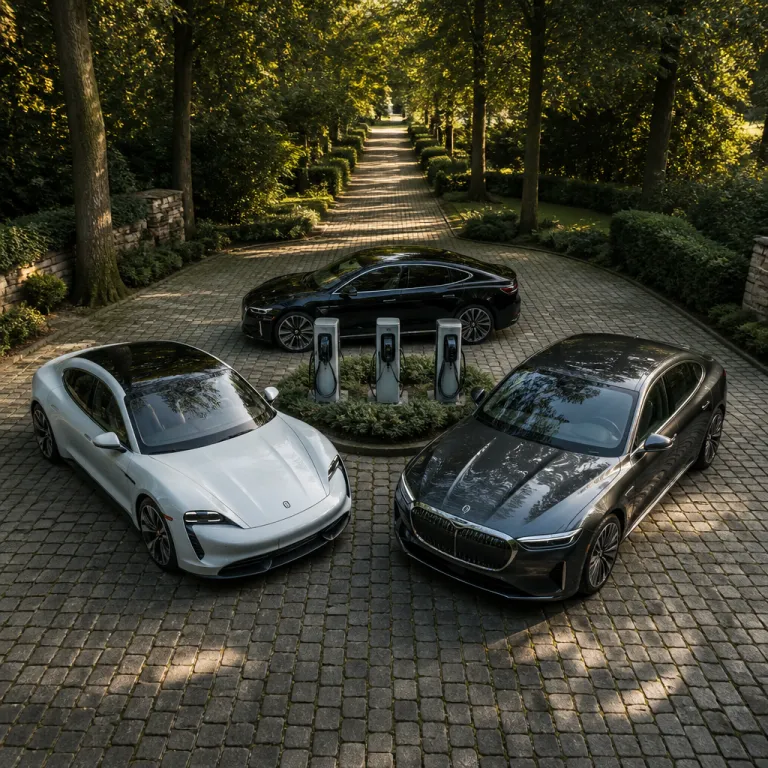
Luxury EV ownership long term review in the real world
The first thing that strikes you after several years with these electric cars is how quickly the launch theatre fades and the daily reality of high-end battery-powered motoring takes over. Once the handover photos are buried in your phone, the Porsche Taycan, Mercedes-Benz EQS, and BMW i7 stop being halo electric vehicles and start being cars that must start every morning, handle school runs, and still feel like a fun drive on an empty Sunday road. That is where the gap between brochure range miles and lived years miles quietly defines whether an electric car truly replaces your previous gas powered limousine.
Across these three vehicles, the headline electric range looks generous on paper, yet the long term story is written in winter traffic, wet motorways, and late night public charging stops. Owners who came from large gas cars often expected to match their old cruising habits, but the Taycan in particular shows how a performance focused electric vehicle can trade range miles for repeatable acceleration and tightly controlled handling. The EQS and i7 feel more relaxed luxury EVs in their driving character, yet their real world range still shrinks when you load the vehicle with passengers, run climate control hard, and sit at autobahn speeds for hundreds of miles.
Three years in, the best electric experience is rarely about the single biggest battery or the lowest official cost per kilometre, it is about how consistently the car delivers its claimed range across seasons. Long-term ownership conversations with drivers tend to revolve around how much buffer they keep in the battery for comfort, and how often they rely on public charging versus home charge routines. As one Taycan 4S owner with 45,000 miles on a 2020 car put it in a UK owners’ forum, “I plan around 200 real miles in winter and 240 in summer, and that predictability matters more than the WLTP number.” That is the moment when an electric car stops being a tech object and becomes a long term companion, judged less by its launch prices and more by how calmly it handles your least glamorous journeys.
Range, seasons, and the truth behind the numbers
Real world range is where the Porsche Taycan divides opinion in any serious long term assessment, because its electric performance is intoxicating while its range miles can dip noticeably in cold weather. On paper, a Taycan 4S Performance Battery Plus from the 2021–2023 model years offers up to around 287 miles WLTP (depending on wheel size, according to Porsche’s European type-approval data), yet independent winter tests from outlets such as What Car? (UK, 2022 cold-weather range test) and Edmunds (US, 2021 real-world range loop) have recorded closer to 200–230 miles when temperatures drop and speeds rise. Owners who regularly drive several hundred miles in one stretch report that the Taycan often undercuts its official figures in sub‑10°C conditions, especially if they enjoy the car as a fun drive on twisty roads rather than cruising gently. That said, many still prefer this vehicle to softer electric cars because the steering feel and chassis balance remain closer to a 911 than to most battery powered cars in this segment.
The Mercedes-Benz EQS tells a different story, prioritising efficiency and comfort so that its electric vehicle range tends to sit closer to expectations across seasons, which matters when you plan years miles of chauffeured use. An EQS 450+ with its 108 kWh usable battery is rated at up to roughly 453 miles WLTP in Europe (WLTP combined cycle for 2022–2024 models), and real world motorway tests from magazines such as Auto Bild and Car and Driver often deliver 320–360 miles at moderate speeds. Its slippery shape and calm throttle mapping help the car stretch each charge, and owners who value serenity over drama often call it the best electric choice for long motorway runs. However, some report that the Hyperscreen and certain electronic modules can feel fragile over the long term, which makes them watch the warranty clock more closely than they ever did with their previous gas cars.
BMW i7 drivers usually talk less about range anxiety and more about how the rear cabin turns every electric car journey into a rolling lounge, yet the car still consumes plenty of energy when fully loaded. The i7 xDrive60, with a battery of around 101.7 kWh usable and a WLTP rating of up to about 387 miles for early European cars, typically returns 260–310 miles in mixed driving according to early owner logs on forums such as Bimmerpost and magazine tests from outlets including Auto Express and MotorTrend. The combination of weight, power, and vast equipment means this electric vehicle can see its range miles shrink if you drive it like a traditional BMW 7 Series on unrestricted roads. For owners who split time between these flagships and smaller electric SUVs or city EVs, the lesson is simple; plan your charging infrastructure strategy around your heaviest vehicle, and use a detailed post winter checklist such as the spring reset for luxury cars to keep tyres, brakes, and car battery health aligned with your actual usage.
Maintenance, moving parts, and costs after the warranty
One of the quiet revelations in any honest high-end EV ownership story is how few moving parts these electric vehicles actually need to keep in motion compared with complex gas powered flagships. There is no oil to change, no exhaust to corrode, and far fewer fluids to monitor, which means scheduled maintenance costs for these cars are often lower than for equivalent gas cars from the same brands. Manufacturer service plans for the Taycan, EQS, and i7 typically focus on cabin filters, brake fluid, and inspections rather than engine work, yet the story is not as simple as saying that every electric car is automatically cheaper to run over many years.
Tyre wear is the first surprise, because the instant torque of the Taycan, EQS, and i7, combined with their weight, can chew through premium rubber faster than many owners expected when they calculated long term cost per kilometre. A set of 21‑inch performance tyres from brands such as Michelin or Pirelli can easily cost £1,000–£1,600 / $1,200–$2,000 fitted at 2024 retail prices, and heavy EVs may need replacements every 15,000–25,000 miles depending on driving style and alignment. High performance electric car tyres are not inexpensive, and when you factor in staggered wheel setups on certain models, the price of a full set can rival a minor service on a traditional gas powered limousine. Brake wear can be lighter thanks to regenerative systems, but only if you use the electric regen modes consistently rather than relying on friction brakes out of habit from older cars.
The second surprise is how owners think about the main car battery once the factory warranty nears its final years, especially on early Tesla Model S and Model 3 vehicles that set expectations for the whole segment. Porsche, Mercedes-Benz, and BMW all offer high voltage battery coverage of around eight years or 100,000–160,000 km on these flagships, and aggregated real world data from Tesla and Hyundai owner fleets suggests typical degradation of roughly 8–12% over that period when used normally. Even so, a long term review must acknowledge that any out of warranty replacement would be a major cost event, often quoted in the tens of thousands in local currency. That is why some owners explore extended coverage and specialist storage routines, using guides such as this resource on summer storage for collector cars to adapt best practices for their own electric cars when they leave the vehicle parked for weeks.
Charging, infrastructure, and the real cost of long distance travel
Charging is where the long term experience becomes less about the cars themselves and more about the ecosystem that surrounds these electric vehicles on real roads. Owners who can install robust home charging infrastructure with three phase capability tend to report the smoothest experience, because their electric car always starts the day with a full battery and no need for early morning public charging stops. A typical 11 kW AC wallbox can add roughly 30–40 miles of range per hour on these large battery packs, and for them, the cost per kilometre feels predictable and comfortably below what they once spent on premium gas for large powered cars.
Long distance travel exposes the gaps, and here the Taycan often benefits from access to high power charging networks that can restore a meaningful charge in minutes rather than hours. Thanks to its 800‑volt architecture, the Taycan can accept up to 270 kW DC on suitable chargers, allowing a 5–80% top‑up in around 20–25 minutes under ideal conditions according to Porsche’s own charging curves and independent tests from outlets such as InsideEVs. Drivers who regularly cover hundreds of miles in a single day say that reliable fast chargers matter more than the theoretical best electric range, because they would rather stop briefly at a known station than nurse the vehicle to stretch its range miles. The EQS and i7 can be more efficient at steady speeds, with peak DC rates of around 200 kW and 195 kW respectively on current European and US specifications, but their owners still depend on a patchwork of public charging providers whose prices, reliability, and payment systems vary widely.
Then there is the question of how these costs compare with running traditional gas cars over several years, especially when electricity prices fluctuate and some regions introduce peak tariffs. In many European markets, home charging at off‑peak rates can work out at roughly 6–10 pence or cents per kWh, equating to 3–6 pence or cents per mile in these sedans, while premium petrol often costs three to four times as much per mile in comparable S‑Class or 7 Series models based on 2023–2024 fuel prices. A thoughtful long term evaluation weighs not only the direct cost of each charge, but also the time spent planning routes, waiting at busy chargers, and occasionally dealing with broken stations. Many seasoned owners now treat an extended warranty pitch with caution, using analyses such as this guide on the real cost of extended warranties to decide whether to invest in extra coverage for charging hardware and high voltage components.
Resale values, model choices, and whether you would buy again
Residual values are where the first wave of long term luxury EV data becomes genuinely useful, because the market has now priced in early fears about battery degradation and rapid model turnover. The Porsche Taycan has held its value better than many expected, helped by strong demand for certain models and a driving experience that feels distinct from more comfort oriented electric cars. Used market trackers in Europe and the US, including dealer auction reports and online valuation tools from 2023–2024, show some Taycan variants retaining around 55–65% of their original list price after three years, which is competitive with high‑spec Panamera models. In contrast, some early Mercedes-Benz EQS and BMW i7 vehicles have seen steeper depreciation, with certain trims closer to 45–55% after a similar period, partly because buyers remain cautious about complex infotainment systems and the pace of new electric vehicle launches.
Owners who cross shop these flagships with best EVs from brands such as Tesla and Hyundai often mention that the broader electric vehicles market moves quickly, which can make any specific car feel old before its time. A Tesla Model S or Model X with strong software support and a vast Supercharger infrastructure can still tempt someone out of a Taycan or EQS, while a well specified Hyundai Ioniq 5 or related electric SUVs can undercut the German trio on price without feeling cheap. One EQS 580 owner who also runs a Model Y Performance summarised it neatly in a 2023 US owners’ group survey: “The Mercedes is where I want to be for four hours on the motorway, but the Tesla app and Supercharger network still make life easier on unfamiliar routes.” That dynamic pushes luxury brands to refine their vehicles every few years, which in turn affects how buyers think about years miles of ownership and the right moment to exit.
Would these owners buy the same cars again after several years and tens of thousands of miles? Many Taycan drivers say yes, valuing the fun drive and analogue steering feel over any range or cost compromises, while EQS owners often praise the ride quality but remain wary of long term electronics reliability. i7 drivers tend to love the rear cabin and silent electric powertrain, yet some admit they might consider other best electric options next time if BMW does not sharpen driver engagement to match the badge heritage.
How the Taycan, EQS, and i7 reshape expectations for luxury EVs
Living with these three electric cars for several years changes how you judge every new premium battery vehicle, because you start to value consistency over spectacle. The Taycan proves that an electric car can feel like a proper sports saloon, yet it also reminds you that performance, weight, and aerodynamics dictate range miles just as ruthlessly as they do in gas powered icons. The EQS shows how far comfort focused electric vehicles can go in isolating you from the outside world, while the i7 demonstrates that a flagship vehicle can be both a rolling office and a private cinema without burning a drop of gas.
At the same time, these cars highlight that the best electric ownership experience depends on how well your life fits the charging infrastructure, your tolerance for software quirks, and your appetite for rapid model evolution. Some owners keep a second car, often a smaller electric car or even a traditional gas car, to handle specific duties such as long ski trips or rural house access where public charging remains thin. Others lean into the electric vehicle lifestyle completely, learning to read consumption data, adjusting tyre choices, and planning years miles of use with the same care they once applied to engine oil and timing belts.
In the broader context of long term luxury EV ownership discussions, the Taycan, EQS, and i7 sit alongside best EVs from Tesla, Hyundai, and other brands, proving that there is no single template for success. A well specified Hyundai Ioniq can feel like a rational electric SUVs choice, while a high end Tesla Model S or Model X still sets benchmarks for software and network integration, yet these German flagships remain benchmarks for craftsmanship and cabin ambience. Ultimately, the real test of these vehicles is not the launch event or the spec sheet, but how they feel on the third winter, the fifth set of tyres, and the first time you realise you have not visited a gas station in months.
FAQ
How does real world range of the Taycan, EQS, and i7 compare over several years ?
Over multiple years, owners report that the Porsche Taycan often delivers lower real world range than its official figures in cold weather, especially when driven enthusiastically. A typical Taycan 4S with Performance Battery Plus might return around 200–230 miles in winter versus a WLTP rating close to 280 miles for 2021–2023 cars, while the Mercedes-Benz EQS 450+ tends to sit closer to its rated range thanks to its efficient shape and calmer power delivery. The BMW i7 usually falls between the two depending on load and driving style, with many drivers seeing 260–310 miles from a full charge in mixed conditions. Across all three electric cars, careful route planning and access to reliable charging infrastructure matter more than the brochure number once the vehicles age.
Are maintenance costs really lower for these luxury EVs than for comparable gas cars ?
Scheduled maintenance costs are generally lower because these electric vehicles have fewer moving parts, no oil changes, and simpler drivetrains than complex gas powered flagships. Official service intervals often stretch to two years, and many checks are visual inspections rather than component replacements. However, owners must budget for higher tyre wear, potential wheel damage from heavy vehicles on large rims, and out of warranty repairs for electronics or the main car battery. Over a long term horizon, many drivers still come out ahead versus similar gas cars, but the savings are not as dramatic as early marketing suggested.
How do charging costs compare with fuel costs for large luxury sedans ?
For drivers with home charging at stable electricity prices, the cost per kilometre for these electric cars is usually significantly lower than fuelling comparable gas cars with premium petrol. At typical residential rates, a full charge on an EQS or i7 battery might cost the equivalent of one third to one half of an equivalent range in a V8 S‑Class or 7 Series. Public charging can be more expensive, especially at high power stations with dynamic prices, and the time spent waiting must also be considered. Owners who travel frequently and rely on public charging networks see a narrower cost advantage, but still benefit from lower maintenance and the absence of fuel price volatility.
Which of the three holds its value best after several years ?
Market data so far shows that the Porsche Taycan has held its value better than many rivals, helped by strong demand and a distinctive driving character. Early Mercedes-Benz EQS and BMW i7 vehicles have generally experienced steeper depreciation, influenced by rapid model updates and buyer caution around complex electronics. Exact resale performance varies by specification, mileage, and regional incentives, but the Taycan currently enjoys the strongest residuals among these three electric vehicles, often retaining around 55–65% of its original price after three years in key markets.
Is it still worth considering a traditional gas powered luxury sedan instead of these EVs ?
For some owners, a gas powered sedan remains attractive if they regularly drive in regions with weak charging infrastructure or need to cover very long distances without planning stops. Diesel or hybrid S‑Class and 7 Series models can still offer 500‑plus mile tanks and quick refuelling, which matters in remote areas. However, many who have lived with the Taycan, EQS, or i7 for several years say they would not return to gas cars because they value the quietness, instant torque, and lower day to day running costs. The choice ultimately depends on your driving patterns, access to charging, and how much you prioritise a fun drive over absolute convenience on the longest journeys.