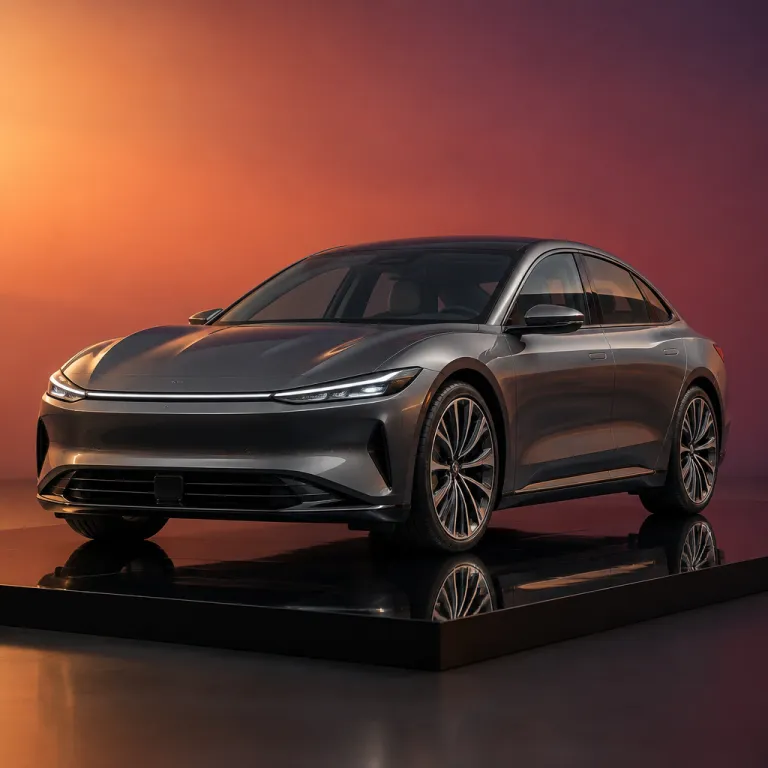
Chinese luxury car brands challenge the old guard
Walk through a high end showroom in Shanghai and the Chinese luxury car brands challenge feels very real. You see a Hongqi E-HS9 parked opposite a long wheelbase Audi A8, and the question is no longer whether a Chinese car can match the panel gaps or leather quality but whether the brand can make you feel something when you press the starter. For a seasoned luxury car owner used to Rolls Royce or Mercedes Benz keys on the tray, that emotional test matters more than any spec sheet.
The new wave of china luxury contenders is led by a tight group of ambitious brands, with Hongqi under the FAW Group banner playing the role of national flagship. This is the same China FAW industrial giant that once focused on state limousines and mass market auto production, now repositioning Hongqi as an ultra luxury statement with extended wheelbase vehicles, ornate grilles and chauffeur centric cabins that deliberately echo Rolls Royce theatre. Around it, BYD’s Yangwang, Nio, Zeekr and others are attacking the premium and ultra fast EV space, proving that Chinese luxury cars can deliver brutal acceleration and fast charging that embarrasses some European leaders.
Yet heritage is not something you can order from a supplier or solve with a joint venture contract. A car brand like Rolls Royce or a long established Mercedes Benz S Class lineage carries decades of stories, from heads of state to family road trips, and that lived history is what Chinese luxury challengers cannot compress into a single product cycle. The Chinese luxury car brands challenge is therefore not about whether a vehicle from Hongqi or another china car marque can be high quality, but whether the brand can build a community, a mythology and a sense of belonging that justifies premium pricing beyond rational value.
For buyers under forty, the equation is shifting toward technology, software and value, which is where the Chinese luxury car brands challenge bites hardest. If a china hongqi SUV offers ultra fast charging, a vast screen array and semi autonomous capability at pricing that undercuts an equivalent Audi or Mercedes Benz, some will happily trade away the crest on the bonnet for the experience in the cabin. For them, a luxury car is defined less by the club they join and more by the seamless integration of their digital life with the vehicle.
For established marques, this means that craftsmanship, service and community are now the defensible ground, while build quality, performance and basic digital integration have become table stakes. A Chinese car from a well funded group like FAW Group can reach high standards of fit, finish and drivetrain refinement quickly, especially when supported by a joint venture with a Volkswagen Group or similar partner. What remains uniquely difficult to copy is the feeling you get when a Rolls Royce V12 whispers to life or when a long term dealer relationship means your car brand knows your preferences before you arrive.
Craft, service and community versus technology and pricing
Luxury, at its core, is about how something makes you feel over time rather than how it dazzles on delivery day. The Chinese luxury car brands challenge is forcing every established car brand to separate what truly defines its identity from what has quietly become a commodity, because software rich vehicles from china now match or exceed many traditional benchmarks. When a Chinese car offers ultra luxury ambience, fast charging and over the air updates at aggressive pricing, the old guard can no longer rely on leather and wood alone.
Craftsmanship is the first line of defence, and Rolls Royce remains the reference point for ultra luxury execution. The way a Rolls Royce Phantom door closes with a muted thud, the way its lambswool carpets compress under hand stitched leather shoes, and the way its bespoke paint reflects city lights in Shanghai or New York are experiences that no new china car rival has yet fully replicated. Hongqi, especially in its Group Hongqi flagship sedans, is trying to answer this by combining Chinese cultural motifs with modern materials, positioning each vehicle as a rolling expression of china luxury rather than a copy of European templates.
Service is the second moat, and it is where many Chinese luxury brands still trail. A long established Mercedes Benz or Audi dealer network in the United States can offer concierge style pick up, loaner luxury cars and technicians who have lived with these vehicles for decades, while a newer Chinese car network is still building that depth of experience. For a luxury car owner used to seamless service, the Chinese luxury car brands challenge will only feel credible when the ownership journey, not just the vehicle, reaches the same high standard.
Community is the third pillar, and it is often underestimated in boardrooms focused on production volumes and quarterly results. Owners clubs, track days, curated road trips and private events create a sense of belonging around a car brand that turns a vehicle into a lifestyle, which is why a Cadillac ATS owner who has experienced an elevated driving experience through curated events, as explored in this analysis of the driving experience for luxury car owners, may hesitate before switching to an unproven Chinese luxury marque. Chinese brands like Nio are experimenting with lounges and community spaces, but it will take time before a china luxury ecosystem feels as mature as the long standing circles around Rolls Royce or Mercedes Benz. In the meantime, the Chinese luxury car brands challenge will keep pushing incumbents to sharpen their service and community offerings rather than resting on heritage alone.
Echoes of Lexus and Genesis, with a Chinese twist
We have seen this movie before, and it started when Lexus arrived with a quiet V8 and a ruthless focus on quality that blindsided European leaders. The Chinese luxury car brands challenge echoes that disruption, but this time the script is written in Shanghai design studios and China FAW engineering centres, with software and batteries replacing naturally aspirated engines as the main battleground. Where Lexus and later Genesis took decades to build full lineups and reputations, Chinese luxury brands are compressing that journey into a handful of product cycles.
Lexus proved that a new premium car brand could win by over delivering on refinement and undercutting on pricing, while Genesis showed that design and driving dynamics could shift perceptions faster than expected. Today, Hongqi and other Chinese luxury players are applying the same logic but adding ultra fast charging, advanced driver assistance and concept car theatrics to the mix, turning every new vehicle launch into a statement that china luxury is no longer a contradiction in terms. The Chinese luxury car brands challenge is therefore not just about copying the Lexus playbook but about rewriting it for an era where software updates matter as much as cylinder counts.
Joint venture structures add another twist, because many Chinese car brands have grown up alongside partners like Volkswagen Group or other global giants. Engineers who once worked on mainstream auto production for a joint venture now move into premium and ultra luxury projects within the same group, bringing with them a deep understanding of global safety, emissions and quality standards. That is why a Chinese car from FAW Group or another major group can feel surprisingly familiar to someone stepping out of an Audi or Mercedes Benz, even as the interface and feature set feel distinctly more digital native.
For prospective buyers weighing a Chinese luxury SUV against a traditional American or European sedan, the comparison now goes beyond badge snobbery. Articles examining how Cadillac models redefined modern American luxury, such as this look at how Cadillac models redefined modern American luxury, show how quickly perceptions can shift when a brand gets design, dynamics and value aligned. The Chinese luxury car brands challenge follows the same pattern, but with the added accelerant of EV technology, where a Chinese car with ultra fast charging and cutting edge software can leapfrog legacy platforms that were never designed around batteries from day one.
When heritage earns its premium and when it does not
For a luxury car owner, the hardest question is not whether a Chinese car is good enough but whether a familiar badge is still worth the extra cheque. The Chinese luxury car brands challenge forces a clear headed audit of what you are actually paying for when you choose Rolls Royce, Mercedes Benz or Audi over Hongqi or another china car contender. Sometimes you are buying engineering depth and residual values, and sometimes you are simply paying for nostalgia wrapped in chrome.
Heritage earns its premium when it translates into tangible benefits over the life of the vehicle. A Rolls Royce, for example, offers not just ultra luxury materials but a level of bespoke craftsmanship, long term service support and brand stability that few Chinese luxury marques can yet match, while a well established Mercedes Benz S Class or Audi A8 still sets benchmarks in chassis tuning, safety validation and global parts availability. In those cases, the Chinese luxury car brands challenge is real but not yet decisive, because the total ownership experience of the legacy car brands still justifies the higher pricing for many buyers.
There are other segments where the balance tilts the opposite way, especially in EVs and software heavy vehicles. When a Chinese car offers ultra fast charging, advanced driver assistance and a concept car style interior at a price that undercuts a comparably sized European vehicle, the heritage premium starts to look more like a sentimental surcharge, and younger buyers in particular are quick to notice. For them, the Chinese luxury car brands challenge is less about whether china luxury can match old world craftsmanship and more about whether the vehicle integrates seamlessly with their digital life, from phone as key to app based service scheduling.
Looking ahead, the most interesting battleground may be where heritage and innovation intersect. Brands like Bentley, which is preparing its first electric car and signalling a new century of craftsmanship as analysed in this piece on Bentley’s first electric car and the next century, show how a storied car brand can use EV technology to reinforce rather than dilute its identity. If Rolls Royce, Mercedes Benz, Audi and other leaders manage the same trick while Chinese luxury marques continue to refine their craft, the Chinese luxury car brands challenge will not end in a simple victory for one side but in a more diverse, more demanding ultra luxury landscape where the real test is not the spec sheet but the third corner on a wet Alpine pass.
Key figures shaping the Chinese luxury car brands challenge
- According to the International Energy Agency, China accounted for more than half of global electric vehicle sales in recent years, which gives Chinese luxury and premium EV brands a massive home market to refine fast charging and software before exporting.
- Data from the China Association of Automobile Manufacturers shows that Chinese car brands have steadily increased their share of domestic passenger car sales, surpassing 50 percent, which strengthens the position of groups like FAW Group and their Hongqi brand when entering export markets.
- Reports from major consulting firms indicate that premium and luxury segments are growing faster than the overall auto market in China, which encourages both established leaders such as Mercedes Benz and Audi and newer Chinese luxury marques to accelerate production of high end vehicles.
- Industry analyses of joint venture structures highlight that partnerships between Chinese groups and global players like Volkswagen Group have enabled rapid technology transfer, which in turn supports the Chinese luxury car brands challenge by raising baseline quality and safety standards.
- Surveys of younger buyers in key markets show that customers under forty place significantly higher value on in car technology and connectivity than older cohorts, which directly supports the thesis that heritage alone will not be enough to defend traditional car brands against Chinese luxury challengers.