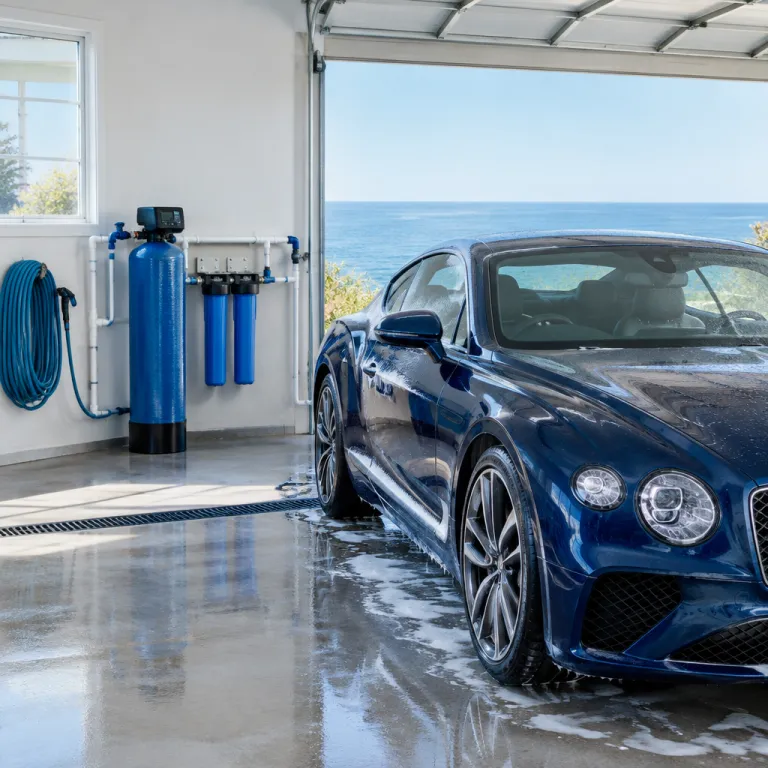
Why softened wash water matters for luxury paintwork
Luxury paint finishes react very differently to ordinary tap water during car washing. When you wash a high value car with hard water, every rinse leaves dissolved minerals that dry into a visible spot on the clear coat, glass, and stainless steel trims. Over time, repeated exposure to untreated wash water without a dedicated car wash water softener system etches these spots into the lacquer and forces more aggressive polishing or even localised refinishing.
Hard water contains calcium and magnesium that bond to the surface after each rinse cycle, and these minerals are especially problematic when you aim for a truly spotless finish without heavy towel drying on delicate clear coats. A dedicated water softener or combined water filtration system removes or neutralises these minerals before they ever touch the car, which means the final free rinse leaves almost no residue and dramatically reduces the risk of micro marring during drying. For owners who already invest in ceramic coatings and premium waxes, pairing those treatments with softened system water is the logical next step to protect both shine and long term value.
Many luxury garages still rely on municipal water systems that vary widely in hardness from one district to another. If your TDS meter shows high dissolved solids, then every wash and rinse is quietly undermining your detailing work and shortening the life of coatings, trims, and even exterior stainless steel exhaust tips. Treating the wash water with a smart softener or reverse osmosis based water filtration unit aligns the quality of your water with the quality of your car, and that alignment is what separates a routine car wash from a genuinely professional maintenance ritual.
How a car wash water softener system actually works
Behind every spot free rinse on a luxury car sits a carefully specified system that manages water chemistry. A typical car wash water softener uses a tank filled with ion exchange resin, and this resin trades hardness minerals in the wash water for sodium or potassium ions that do not leave a spot when the water evaporates. When the resin becomes saturated, the product regenerates with a brine solution and the system automatically restores full softening performance.
For owners who want even purer free water, a compact reverse osmosis filtration system can follow the softener and strip out most remaining dissolved solids before the final free rinse. This two stage approach, combining a water softener with a reverse osmosis water filter, is common in commercial car washing facilities where a spotless finish is non negotiable and where the price of reworking a car is higher than the cost of better water systems. In a private luxury garage, a smaller smart system can deliver similar spot free results while using less salt, less space, and often less energy.
Pre filters play a crucial role in protecting the main softener and reverse osmosis membranes from sediment and chlorine. A high quality stainless steel housing with easily replaceable cartridge filters ensures that the system water feeding your hose remains clean, odour free, and gentle on both paint and wheels. When you already care about advanced coatings for wheels and trims, such as those discussed in this guide to a dedicated trim and wheel coating in every luxury garage on my luxury car, it makes sense to feed those surfaces with the cleanest possible wash water from the outset.
Choosing the right configuration for your luxury garage
Selecting the ideal car wash water softener for a luxury car is less about brand names and more about matching capacity, flow, and options to your real usage. A small softener with limited resin volume may handle an occasional wash, but frequent car washing of several vehicles or a collection requires a larger system water capacity to maintain a consistently spot free rinse. The price difference between undersized and correctly sized water softeners is often modest compared with the cost of repainting or heavy correction on a prestige car.
Start by measuring your incoming water hardness with a TDS meter and checking the flow rate at the hose bib you use for the car wash. These two data points determine how quickly the resin in your softener will exhaust and how often the filtration system must regenerate, which in turn affects salt consumption, maintenance intervals, and long term operating price. If your property already uses solar panels and energy efficient pumps, you can integrate a smart control head that schedules regeneration cycles during off peak times to reduce both noise and energy draw.
Installation options range from a dedicated line that only feeds the exterior hose for car washing to a more comprehensive water filtration setup that also improves drinking water quality inside the home. Many high end systems ships with modular filters that allow you to add carbon stages, sediment pre filters, or even a polishing water filter for the final spot free rinse. When you are already attentive to delicate exterior plastics and trims, as explained in this guide to safely removing paint from plastic trim on a luxury car on my luxury car, extending that same care to the water touching every surface is a natural extension of your maintenance philosophy.
From hose to towel drying: executing a spot free wash
Even the best car wash water softener cannot compensate for poor wash technique, especially on dark luxury paint. Begin with a thorough pre rinse using softened system water through a dedicated hose, which removes loose dirt and reduces the risk of dragging abrasive particles across the clear coat during contact washing. A high quality nozzle that delivers a strong sheet of water helps the softened wash water push contaminants away rather than simply moving them around.
During the contact wash, always pair your softened water with a pH balanced shampoo and separate wash and rinse buckets to keep the wash mitt as clean as possible. The goal is to let the chemistry of the water filtration and the lubricity of the shampoo do most of the work, so that your hands apply minimal pressure and the paint remains free from new swirls after every car washing session. Once the wash is complete, a slow, steady free rinse with low pressure softened water encourages the water to sheet off the panels, leaving fewer droplets that could form a spot as they dry.
Towel drying remains important, but it becomes far less stressful when the water itself is almost spot free. Use large, plush microfibre towels and gently lay them on the surface, allowing capillary action to pull the remaining free water away rather than wiping aggressively. With properly softened wash water and a well maintained filtration system, you will notice that even if a few small droplets remain on glass or stainless steel trims, they rarely leave visible marks, which means less polishing, less risk, and more time enjoying the car instead of correcting it.
Comparing softening technologies and long term ownership costs
Luxury car owners often ask whether a traditional salt based water softener, a reverse osmosis unit, or a mixed bed deionising product offers the best balance of performance and price. Salt based water softeners excel at handling large volumes of wash water and protecting plumbing, but they still leave a small amount of dissolved solids that can create a faint spot on very sensitive finishes. Reverse osmosis systems and deionising filters, by contrast, can produce almost laboratory grade free water that dries virtually spotless, though they require more careful monitoring and cartridge replacement.
For a single high end car washed weekly, a compact softener with high quality resin followed by a small deionising filter often delivers the best compromise between operating cost and spot free performance. The softener handles the bulk of the hard water load, extending the life of the more expensive polishing filters and reducing the frequency with which new cartridges must be ordered and ships to your home. In a larger collection or semi commercial setting, a full reverse osmosis filtration system with a sizeable storage tank may be justified, especially when the same purified water also feeds detailing bays, steam cleaners, or even certain drinking water taps.
When evaluating options, consider not only the purchase price but also salt usage, filter replacement intervals, and the value of your time. A smart control head that tracks system water usage and alerts you when filters approach the end of their life can prevent unexpected drops in performance and the sudden return of water spots on your next car wash. Owners who already weigh originality versus modern upgrades, as discussed in this analysis of when a reimagined classic makes more sense than a full restoration on my luxury car, will recognise that a discreet water filtration upgrade is one of the least intrusive yet most protective modifications you can make to your property for the sake of your cars.
Integrating water systems into a holistic luxury car care routine
Thinking of a car wash water softener as a standalone gadget underestimates its role in a serious luxury car care programme. In reality, the water systems that feed your hose, pressure washer, and even interior detailing tools form the foundation on which every other product and technique depends. If the base water is hard, contaminated, or inconsistent, then even the finest shampoos, sealants, and coatings cannot deliver their full potential or maintain a truly spotless appearance.
Integrating a well designed filtration system into your garage means planning the route of the plumbing, the placement of stainless steel housings, and the accessibility of filters for routine service. Many owners choose to mount small TDS meter displays near the main hose connection, so they can verify at a glance that the wash water remains within the target range for a spot free rinse before they even touch the car. When the reading begins to climb, it is a clear signal that the resin or final polishing filters are nearing exhaustion and that it is time to schedule maintenance before water spots reappear.
This systems based approach extends beyond the car wash and into other aspects of property care that indirectly affect your vehicles. Softened or purified free water used on glass balustrades, solar panels above the garage, and exterior stainless steel fixtures reduces mineral staining that could otherwise drip or blow onto parked cars during rain and wind. By treating water as a controlled variable rather than an afterthought, you elevate your entire environment to the same standard of care you already apply to paint correction, interior detailing, and mechanical servicing.
Key figures on water quality and luxury car washing
- In many European cities, average hard water levels range between 200 and 400 parts per million of dissolved solids, while most detailing professionals aim for a TDS meter reading below 50 parts per million for a truly spot free rinse (based on typical municipal water reports and detailing industry guidelines; always check your local supplier’s published data).
- Technical literature from water treatment manufacturers indicates that ion exchange resin based water softeners can remove up to 90 percent of calcium and magnesium ions from system water, significantly reducing visible spotting on automotive paint and glass when compared with untreated wash water (figures drawn from manufacturer performance sheets and independent certification tests).
- Reverse osmosis filtration systems are commonly rated to reject 95 to 99 percent of dissolved solids, which is why many commercial car washing facilities use reverse osmosis water for the final free rinse to minimise towel drying and reduce labour time per car (data typically verified through third party laboratory testing for certified systems).
- Field tests by professional detailing studios have reported that using softened or deionised water can cut drying time by 20 to 30 percent, because purified free water sheets off panels more easily and leaves fewer droplets that require manual removal (results vary with vehicle shape, ambient temperature, and wash technique).
- Industry surveys indicate that the price of installing a dedicated car wash water softener and basic filtration system in a private garage often represents less than one percent of the replacement cost of a single modern luxury car, yet can extend the interval between major paint correction services by several years (figures compiled from installer quotations and detailing studio maintenance records).
FAQ about car wash water softener systems for luxury cars
Do I really need a car wash water softener if my car is ceramic coated ?
A ceramic coating reduces how strongly minerals bond to the paint, but it does not change the composition of the wash water itself. If your local system water is hard, minerals will still dry on the surface and can eventually leave a faint spot or outline on the coating. Using a water softener or reverse osmosis filtration system keeps the water clean enough that the coating can perform at its best and remain easier to maintain over time.
Is a reverse osmosis system better than a standard water softener for car washing ?
A standard water softener is excellent for removing most hardness minerals and is usually sufficient for many owners, especially when followed by careful towel drying. A reverse osmosis system goes further by removing the majority of dissolved solids, which produces nearly spotless free water that can often air dry without leaving visible marks. The choice depends on your water hardness, your tolerance for minor spotting, and how much you value reduced drying effort versus higher initial price and maintenance.
Can I use the same softened water for drinking water and car washing ?
Many households route softened system water to both domestic fixtures and exterior hose bibs, but drinking water preferences vary. Some people prefer to drink water that has passed through a separate water filter or reverse osmosis unit, which can be installed after the main softener to reduce sodium content and improve taste. From a car care perspective, using the same softened wash water for both applications is technically acceptable as long as the filtration system is properly maintained.
How often do I need to replace the resin or filters in my system ?
The lifespan of ion exchange resin and cartridge filters depends on your incoming water hardness, total wash water volume, and system design. In a typical private luxury garage, resin in a well sized softener can last several years, while polishing filters or deionising cartridges may need replacement every few months if you wash frequently. Monitoring your TDS meter readings and watching for the return of faint water spots on glass or stainless steel trims provides a practical cue that maintenance is due.
Will a car wash water softener damage my car or existing plumbing ?
When correctly specified and installed, a water softener or reverse osmosis filtration system is safe for both vehicles and household plumbing. The softened water is actually gentler on metal components and fixtures, reducing scale buildup in hoses, pressure washers, and stainless steel fittings used around the garage. The key is to work with a qualified installer who understands both residential water systems and the specific flow and pressure requirements of car washing equipment.