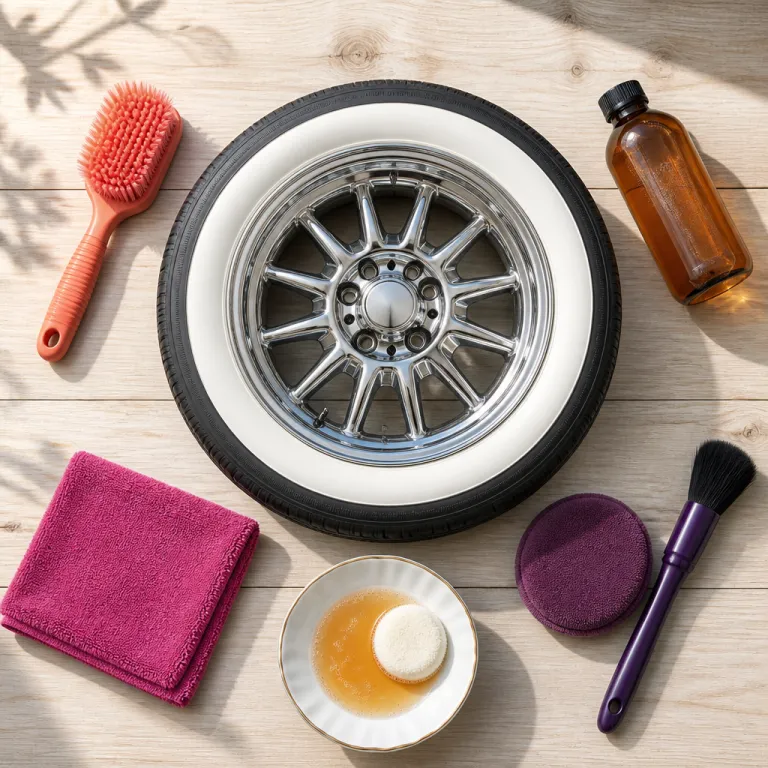
Why pristine white walls still matter on a luxury car
On a luxury car, immaculate white walls frame the bodywork like jewelry. When the right white wall cleaner is used, the contrast between the deep paint and the bright tire sidewall elevates the entire visual presence of the car. A carefully chosen cleaner for each tire ensures that every white rubber surface matches the standard of the leather, wood, and metal inside.
Owners often underestimate how much a single product will influence the perceived age and value of their car. A harsh tire cleaner can yellow white walls, dry the tire rubber, and leave streaks on adjacent black paint or polished wheels, while a balanced product preserves both the whitewall and the black wall portions of the sidewall. Selecting a dedicated white wall cleaner that works great on both white and black areas of the tire is therefore a strategic maintenance decision, not a cosmetic whim.
Luxury cars frequently sit in climate controlled garages, yet their white walls still collect brake dust, road film, and microscopic rubber particles from other tires. This contamination bonds to the rubber surface and slowly dulls the white wall, so a general car wash shampoo alone will never fully restore the original brightness. A specialist wheel cleaner and tire cleaner combination, used with the correct technique, keeps white walls crisp while protecting the surrounding wheels tires assembly.
Choosing a white wall cleaner that respects premium materials
For high end vehicles, the best white wall cleaner is always chemistry based on controlled pH and tested surfactants. Before committing, a discerning customer should read independent reviews and examine the technical data sheet or safety data documentation to understand how the product interacts with rubber and painted surfaces. A premium product will clearly state that it is suitable for whitewall tires, black wall tires, and delicate wheel finishes such as diamond cut alloys or polished stainless steel.
Concrete examples help when comparing options. A popular pH balanced cleaner such as Meguiar’s D143 Non-Acid Wheel & Tire Cleaner lists a typical dilution of 1:1 for heavy soil and up to 4:1 for maintenance cleaning, with manufacturer figures indicating roughly 8 to 12 average size tires per liter of ready to use solution. Griot’s Garage Rubber Cleaner, another frequently recommended product for whitewall tires, is supplied as a ready to use formula and is specified by the brand as safe for both white and black sidewalls when used as directed.
When comparing products, look beyond the headline sale price and consider the effective cost per liter or per gallon. A larger size gallon container often appears expensive at first glance, yet the long term price per application can be significantly lower than that of a small bottle, especially for a car collection with multiple white walls. Many luxury owners in the United States now track their detailing costs with the same rigor they apply to insurance, servicing, and even specialist owner forum insights from resources such as luxury car owner reviews that go beyond press tests.
Packaging details also matter because they signal how the product will behave in real use. A well designed trigger sprayer on a one gallon refill, clear hazard pictograms, and a legible safety data label all indicate that the manufacturer understands professional car wash environments as well as private garages. When you view details on a retailer page, check whether the product will be safe on every rubber surface, whether it is positioned as a great product for both white walls and standard tires, and whether orders ship with proper protective wrapping to avoid leaks.
Understanding size, price, and long term ownership economics
Luxury car ownership is as much about disciplined maintenance planning as it is about emotional enjoyment. The choice of white wall cleaner, wheel cleaner, and complementary tire cleaner products should fit into a broader cost of ownership model that already includes detailing, storage, and mechanical servicing. Owners who understand the true cost of whitewall care can better protect resale value and avoid expensive wheel or tire replacement caused by chemical damage.
When evaluating size options, consider how many cars and how many white walls you maintain each month. A compact bottle may suit a single weekend car, while a professional size gallon container becomes logical for a collection, a family fleet, or a shared detailing arrangement, especially when the sale price per liter is significantly lower than smaller products. Resources that explain what luxury ownership actually costs after the showroom, such as detailed breakdowns of post purchase expenses, help frame the price of a great product in the context of depreciation, insurance, and scheduled servicing.
Many premium white wall cleaner brands in the United States publish a data sheet that lists coverage per liter, recommended dilution, and expected number of tires per bottle. For example, a concentrated formula might specify a 1:4 dilution ratio for routine cleaning and 1:1 for heavily soiled white walls, with an estimated coverage of eight to twelve tires per liter of ready to use solution. This information allows you to calculate a realistic cost per car wash, per set of wheels tires, and per season, rather than relying on vague impressions of price. Once you have this clarity, you can align your orders ship schedule with your detailing calendar, ensuring that you never skip content in your maintenance routine by running out of essential cleaner at the wrong moment.
Safe techniques for cleaning white walls on luxury wheels
Technique matters as much as chemistry when working on high value wheels and white walls. Start by rinsing the wheel and tire to remove loose grit, because any dry particles trapped under a brush can scratch both the whitewall and the adjacent black wall areas. Then apply your chosen white wall cleaner evenly, allowing it to dwell for the manufacturer’s recommended time without drying on the rubber surface.
For clarity, think of the process as a simple five step routine: (1) pre rinse the wheels tires assembly thoroughly; (2) spray the white wall cleaner onto the sidewall from bottom to top; (3) agitate the white area with a dedicated brush, paying attention to raised lettering; (4) rinse from top to bottom until the runoff is clear; and (5) dry the wheel and tire with a clean microfiber towel to prevent water spotting on nearby black paint and polished metal.
Use a dedicated soft to medium bristle brush for the tire rubber and a separate brush or microfiber mitt for the wheel itself. This separation prevents the transfer of aggressive tire grime onto delicate wheel finishes, especially on multi piece rims or wheels tires with intricate spoke designs that are common on luxury models. Work the cleaner into the white wall lettering or stripe with small circular motions, then rinse thoroughly until the water runs clear and the white walls appear uniformly bright.
For cars with complex brake systems and expensive calipers, avoid overspray of strong tire cleaner onto hot components immediately after spirited driving. Allow the car to cool, then perform the car wash and wheel cleaner stages in the shade to reduce the risk of spotting or chemical flash drying on both black paint and polished metal. When the process is complete, a quick inspection under good lighting will confirm that the product will not leave residue, that the whitewall is evenly restored, and that the overall finish works great with the rest of the detailing work.
Protecting whitewall tires between washes
Once the white walls are clean, protection becomes the next priority for a luxury car owner. A modern white wall cleaner often pairs well with a dedicated tire dressing that is safe for both white and black sections of the sidewall, helping to repel dirt and UV radiation. Choose a satin finish dressing rather than a glossy one, because excessive shine can cheapen the appearance of an otherwise elegant car.
Apply the dressing sparingly with a foam applicator, working it into the tire rubber while avoiding contact with the tread and braking surfaces. This controlled application maintains grip, preserves the crisp edge between the whitewall and the black wall, and prevents sling onto the bodywork during the first drive after a car wash. Regular light maintenance like this means that each subsequent use of your preferred cleaner requires less agitation, reducing wear on both the rubber surface and the wheel finish.
Storage conditions also influence how long white walls stay bright between full washes. Cars kept in cool, dry garages away from direct sunlight experience slower rubber oxidation, so the white wall remains closer to its original tone for longer periods. Owners who rotate their cars in a collection should schedule quick inspections of tires, wheels tires assemblies, and any protective coatings, using their maintenance notes almost like a safety data log for the entire fleet.
Buying, shipping, and evaluating white wall care products
When purchasing white wall cleaner and related products online, pay attention to both logistics and technical transparency. Reputable retailers in the United States clearly state how quickly orders ship, whether there are restrictions on shipping chemical liquids, and how the packaging protects against leaks that could damage other items. They also provide a direct link to the product’s safety data and technical data sheet so that professional detailers and informed private owners can assess suitability.
Before committing to a large size gallon container at an attractive sale price, read through customer reviews with a critical eye. Focus on feedback from owners of luxury or classic cars with white walls, rather than generic comments from standard car wash users who may only have black tires and simple wheels. Look for repeated mentions that the product will not yellow the whitewall, that it works great on mixed white and black wall designs, and that it is considered a great product for sensitive rubber surface applications.
Some specialist suppliers offer tiered pricing where the sale price improves with multiple units, which can be efficient for collections or shared orders among enthusiasts. When you view details on such offers, confirm that the size options, concentration, and recommended dilution align with your maintenance schedule and storage capacity. For owners considering long term value, resources on securing exceptional value from second hand luxury cars, such as guides to preserving resale appeal, reinforce how consistent white wall care supports both aesthetic pleasure and financial prudence.
Key figures on luxury tire and white wall maintenance
- According to the U.S. Tire Manufacturers Association consumer tire care guidance, proper tire care, including regular cleaning and pressure checks, can extend tire life by several thousand kilometers compared with neglected tires, which directly affects the long term cost of maintaining white walls on luxury cars.
- Detailing industry market overviews suggest that specialty wheel and tire cleaner products typically account for around one tenth of total professional detailing chemical expenditure, highlighting how significant white wall cleaner choices are within an overall maintenance budget. These figures are aggregated estimates based on published trade reports rather than a single study.
- Surveys of premium car owners by major detailing brands consistently show that a majority of respondents rate tire and wheel appearance as “very important” in perceived vehicle value, placing white walls and wheels tires cleanliness almost on par with paint condition. Exact percentages vary by survey, so treat them as indicative rather than absolute.
- Professional detailers often recommend cleaning and lightly protecting tires every 1 000 to 1 500 km of driving, which for many luxury cars translates to a dedicated white wall maintenance session every one to two months, depending on climate and usage. This interval is a practical rule of thumb rather than a strict requirement.
FAQ about white wall cleaner for luxury cars
How often should I clean whitewall tires on a luxury car ?
For a luxury car that is driven regularly, whitewall tires should be cleaned with a dedicated white wall cleaner every four to six weeks. If the car is used only occasionally, a full clean after each long drive and a light wipe down every few weeks is usually sufficient. The goal is to prevent heavy buildup so that the rubber surface never requires aggressive scrubbing.
Can I use the same cleaner on white walls and black wall tires ?
Many modern products are formulated as safe tire cleaner solutions for both white walls and standard black wall tires. Always check the label, safety data, and technical data sheet to confirm compatibility with mixed sidewall designs and sensitive wheel finishes. If in doubt, test the cleaner on a small, inconspicuous area of the tire rubber before treating the entire wheel.
Will a strong wheel cleaner damage my luxury wheels or tires ?
Highly acidic or highly alkaline wheel cleaner formulas can etch delicate finishes and dry out rubber if misused. Luxury car owners should select pH balanced products that are explicitly approved for their wheel type and for use near whitewall areas. Following the manufacturer’s dwell time and rinsing instructions is essential to avoid long term damage.
Is a larger size gallon container always better value ?
A larger size gallon container usually offers a lower price per liter, but only if you will realistically use the full amount before the product’s recommended shelf life expires. For a single car with small white walls, a medium size bottle may be more practical and easier to store. Owners of multiple cars or those who detail frequently can benefit more from bulk sale price offers.
What should I check before ordering white wall cleaner online ?
Before placing an order, review the product description, customer reviews, and any linked safety data or technical data sheet to ensure the cleaner suits your specific tires and wheels. Confirm that orders ship to your region, that the sale price reflects the actual size of the container, and that the retailer has clear policies on handling chemical products. This due diligence helps ensure that the product will perform as expected on your luxury car’s white walls.
