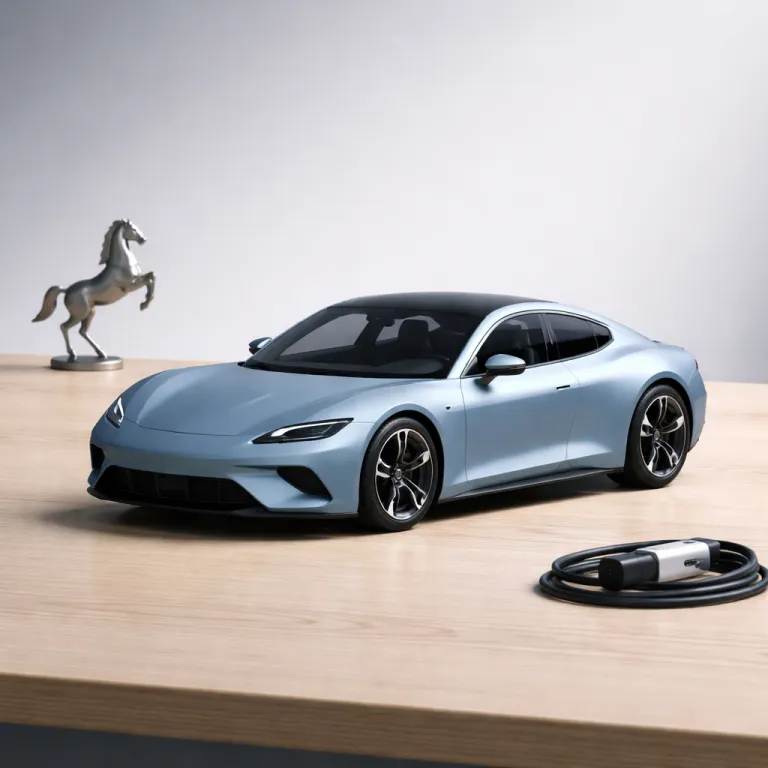
Ferrari Luce electric GT: architecture, design, and first-owner appeal
Ferrari Luce electric GT format and the buyer Ferrari has in mind
Ferrari has chosen to launch the Ferrari Luce electric as a four door, four seat grand tourer rather than a two seat supercar. This format quietly signals that the marque expects existing owners of the Purosangue and Roma to treat the new electric car as a daily drive that can carry family, luggage, and a serious appetite for speed. For a collector with several Ferrari models already in the garage, this Ferrari Luce becomes the electric vehicle that finally fits the school run, the airport transfer, and the late night autostrada blast.
The Ferrari Luce sits conceptually between the Purosangue and the Roma, with a longer wheelbase, a low roofline, and a rear stance that still reads as pure Ferrari when viewed from any angle. Where the Purosangue leans toward a crossover and the Roma toward a classic coupé, the Ferrari Luce electric GT stretches the cabin, giving rear passengers a genuinely usable space and a panoramic view without diluting the driver view from the front seats. Owners who move between these cars will notice how the steering wheel, primary controls, and driving position keep the same Ferrari logic, so the transition from V12 cylinders to silent quad motor power feels like a change in soundtrack rather than a change in brand.
Ferrari has indicated in its 2022 Capital Markets Day and subsequent product roadmap briefings that the Luce will rely on an in house high voltage architecture, widely reported by industry analysts at around 880 V, and that single number matters more for owners than any headline acceleration claim. Higher voltage allows the electric Ferrari to sustain repeated hard drive sessions on mountain passes while keeping the battery and each motor within a comfortable thermal window, which is crucial if you expect your electric car to behave like a track ready GT rather than a fragile gadget. It also means that fast charging to restore a meaningful range figure during a long European trip becomes a coffee stop, not a lunch break, which is exactly how a Ferrari electric should fit into a busy life.
From F1 Halbach motors to Luce interior minimalism
Beneath the sculpted bodywork, the Ferrari Luce electric is expected to use a Halbach array motor configuration inspired by the marque’s Formula 1 hybrid systems and related research disclosed in European patent filings such as EP 3 890 258 A1, which describes flux concentrating rotor arrangements. By concentrating magnetic flux toward the stator, each electric motor achieves higher torque density, which lets engineers package a quad motor layout without bloating weight or compromising the low driving position that Ferrari drivers expect. For you as an owner, that means instant torque on tap at any speed, with all wheel drive traction that can still feel rear biased and playful when the controls are set to their most aggressive modes.
The collaboration with Jony Ive, Marc Newson, and the LoveFrom studio reshapes what a Ferrari interior can be in an electric vehicle era. When designer Jony Ive and Marc Newson, often referenced together as Ive Marc in design circles, apply their philosophy to a cabin, you get fewer physical controls but richer digital displays, and the Ferrari Luce interior follows that script while preserving key Ferrari touchpoints like the steering wheel manettino and the sculpted shift paddles. In Ferrari’s own words from Capital Markets Day, future cabins will combine “digital innovation with timeless Italian craftsmanship,” and the Luce is positioned as the first electric GT to fully express that direction, with a driver view framed by ultra crisp digital displays that float above a clean dash, and secondary controls hidden until needed so the driver can focus on the drive while passengers enjoy a lounge like rear space.
Unlike the more classical cockpit of the Roma or the taller, more commanding seating of the Purosangue, the Luce interior aims for a calm, almost architectural feel that suits silent electric cruising. Ferrari has stated in investor briefings that the interface has been designed so the driver can adjust every major control without leaving the steering wheel, while passengers access their own layer of information and entertainment through separate digital displays. This separation of control zones respects the traditional Ferrari focus on the driver, yet acknowledges that a four seat electric Ferrari GT will often carry non enthusiast occupants who simply want comfort, quiet, and a beautiful view out.
Collectability, sound, and the first electric Ferrari to own
For serious collectors, the Ferrari Luce electric is not just another electric car, it is positioned as the first Ferrari electric to reach series production, and first of a line models from Maranello have historically held a special place in the market. Think of how early twelve cylinder grand tourers or the first mid engine V8s now command premiums, and you start to see why a well specified Ferrari Luce with low kilometres and a full service history may become a long term asset rather than a depreciating appliance. The fact that Ferrari is developing its own high voltage hardware and bespoke quad motor system, rather than buying off the shelf components, only strengthens the narrative that this is a landmark model rather than a compliance exercise.
The unanswered question many owners quietly ask is whether the Ferrari Luce electric will sound like anything at all, and whether Ferrari even wants it to. Engineers in Maranello have hinted in interviews and technical briefings that the focus is on feedback through the steering wheel, the seat, and the finely tuned controls, using torque modulation and wheel slip rather than artificial noise to tell the driver what the car is doing at the rear axle. In practice, that could mean a new kind of Ferrari soundtrack, where the rising whine of each motor, the faint gear reduction hum, and the rush of air over the bodywork replace the familiar bark of multi cylinder engines without losing emotional impact.
Owners used to the Purosangue and Roma will likely keep those cars for their combustion character, while using the Ferrari Luce electric as the everyday GT that glides into city centres and underground garages without drama. The key will be how naturally the car communicates grip, torque distribution, and speed through its digital displays and physical feedback, because that is what separates a true Ferrari electric from any other fast electric vehicle on paper. If the Luce delivers that signature sense of control on a wet Alpine pass, then the spec sheet will fade into the background, and the story will be written in the third corner rather than in any brochure tagline.
Key figures for Ferrari Luce electric and high performance EV GTs
Note: The following figures reflect early industry reporting, supplier documentation, and regulatory filings; final specifications will depend on Ferrari’s confirmed production announcement, and detailed data such as battery capacity (kWh) and peak DC charging power (kW) had not been officially released at the time of writing.
| Specification | Ferrari Luce electric (projected) |
|---|---|
| Electrical architecture | Approx. 880 V in house system (industry estimate) |
| Power output | Targeted > 1,100 horsepower (quad motor, unconfirmed) |
| Drivetrain layout | All wheel drive with rear biased dynamics |
| WLTP driving range | Indicated > 330 miles (pre homologation target) |
| Production timing | Series production expected from late 2026 |
| Indicative pricing | Projected to start above 500,000 euros |
- Ferrari has confirmed in investor presentations that the Ferrari Luce electric will use an in house high voltage architecture to support both ultra fast charging and sustained high performance driving, while the often cited 880 V figure remains an external projection rather than an official specification.
- The Luce is targeted in internal planning documents and supplier briefings to deliver more than 1,100 horsepower through a quad motor layout with all wheel drive capability and a rear biased dynamic character, although final output figures will only be confirmed at launch.
- Preliminary European WLTP range targets above 330 miles have been referenced in early homologation data and category benchmarks for high performance electric vehicle grand tourers in this segment, and should be treated as indicative rather than guaranteed.
- Production of the Ferrari Luce electric is widely reported by automotive industry research firms to begin in late 2026, with first customer cars expected to reach owners shortly after, consistent with the timelines outlined in Ferrari S.p.A. Capital Markets Day materials.
- Pricing is projected by analysts to start above 500,000 euros, placing the Luce alongside the most exclusive Ferrari GT cars and signalling clear collectability potential if demand outstrips the planned production run.
Questions luxury owners ask about Ferrari Luce electric
How does the Ferrari Luce electric fit alongside Purosangue and Roma in a collection ?
The Ferrari Luce electric complements a Purosangue and a Roma by covering the role of a silent, long range GT that still feels like a Ferrari on a demanding drive. Where the Purosangue offers elevated seating and multi terrain usability, and the Roma delivers a classic front engine coupé experience, the Luce adds four door practicality and electric vehicle access to low emission zones without sacrificing performance. For many owners, that trio will cover every use case from ski trips to coastal weekends while keeping a consistent brand character across all cars.
Why does the 880 V architecture matter for real world ownership ?
The reported 880 V system in the Ferrari Luce electric allows higher charging power and lower current for the same energy transfer, which reduces heat and stress on components during repeated fast charges. This matters when you use the Ferrari Luce as a true grand tourer, because you can arrive at a high power charger, add substantial range in a short stop, and then continue driving at high speed without worrying about thermal derating. It also gives engineers more headroom to manage quad motor torque delivery and regenerative braking without compromising reliability.
What does the LoveFrom collaboration change inside the Luce interior ?
The involvement of Jony Ive, Marc Newson, and the LoveFrom team brings a level of interface refinement rarely seen in performance cars, let alone in a Ferrari. Their approach emphasises clarity, reduction of visual noise, and intuitive controls, so the Ferrari Luce interior uses digital displays only where they genuinely improve the driver view and passenger experience. As a result, the cabin feels both technologically advanced and surprisingly calm, which suits the near silent character of an electric Ferrari GT.
Will the Ferrari Luce electric feel like a traditional Ferrari to drive ?
Ferrari has engineered the Luce so that steering feel, brake modulation, and chassis balance remain central, even though propulsion comes from electric motors rather than multi cylinder engines. The quad motor, all wheel drive system is tuned to behave with a strong rear bias, allowing the driver to adjust the car on the throttle in a familiar way, while electronic controls manage torque with far greater precision than any mechanical differential. Owners moving from a Roma or Purosangue should recognise the brand’s dynamic signature, just expressed through instant electric torque instead of rising revs.
How might the first Ferrari electric influence long term value and collectability ?
Historically, first of a line Ferrari models, whether the first mid engine V8s or the earliest twelve cylinder grand tourers, have attracted strong interest from collectors over time. The Ferrari Luce electric occupies that same strategic position as the first series production Ferrari electric, backed by in house hardware and a clear design narrative involving figures like designer Jony Ive and Marc Newson. For owners who maintain their cars carefully and avoid heavy mileage, the Luce could become both a usable daily GT and a significant reference point in the evolution of high performance electric vehicle design.
Sources
- Ferrari S.p.A. Capital Markets Day 2022 investor presentations and product roadmap briefings
- European WLTP pre homologation filings and technical summaries for high performance EV grand tourers
- Industry analysis from established automotive research firms and supplier documentation